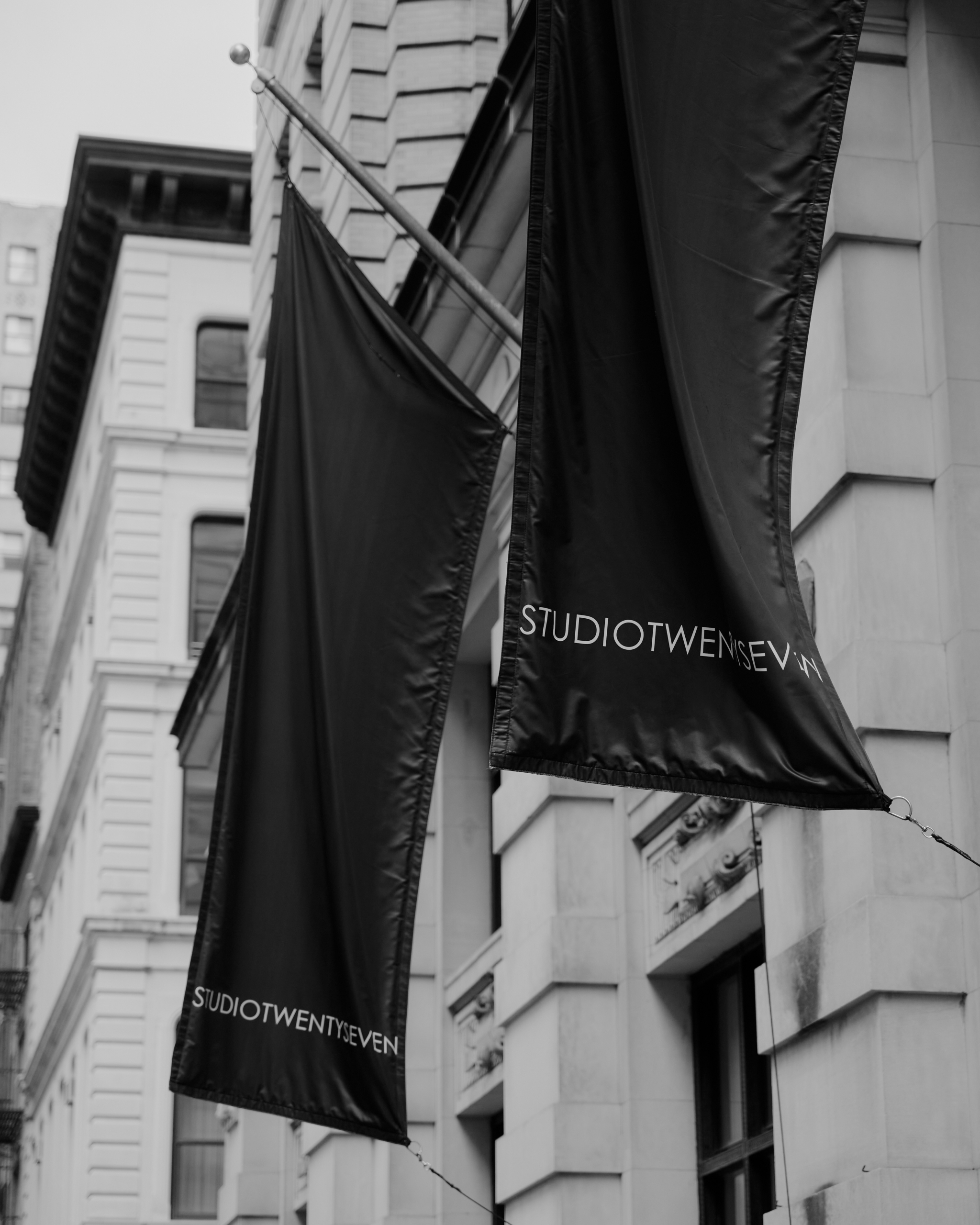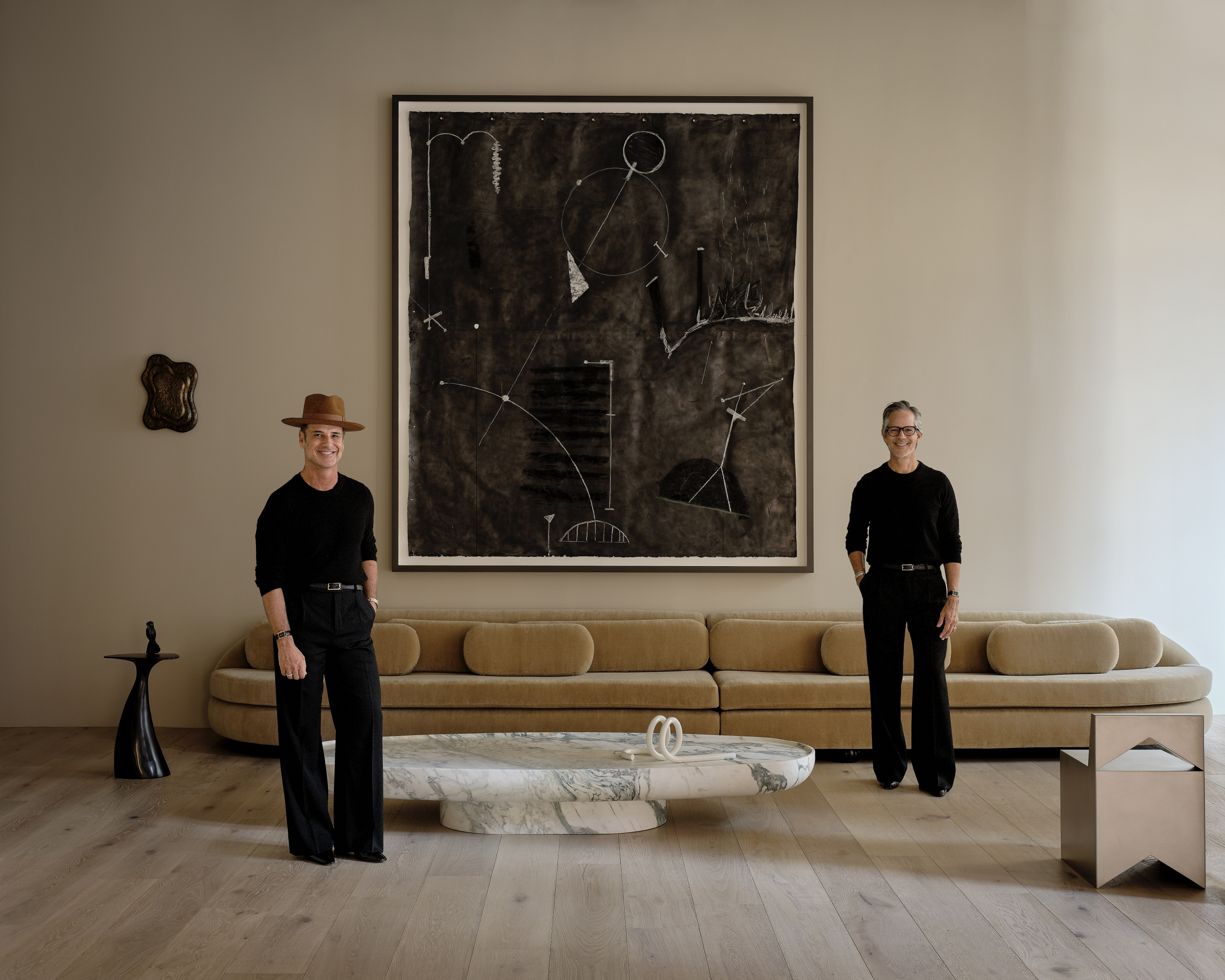

NACHO POLO AND ROBERT ONUSKA, DUAL VISIONS, COMPLEMENTARY SOULS—STUDIOTWENTYSEVEN AND THE PURSUIT OF THE PERFECT QUAN.
Project by Niccolò Lapo Latini
NACHO POLO, Cannes, 18th May 2025 // Between the glamour and allure of the Cannes Film Festival and the fresh breeze of the Côte d’Azur, Nacho Polo and Robert Onuska are taking a moment of inspiration before returning to their treasured studio-gallery in Tribeca, New York // New ventures are already underway—from a first-ever collaboration with Marina Abramović in partnership with Mia Le Journal, marking the magazine’s 10th anniversary, to the forthcoming opening of STUDIOTWENTYSEVEN’s third jewel in London, a sophisticated expansion into the heart of Europe.
In a world saturated with noise, Nacho Polo seeks silence — not absence, but essence. His path is one of distillation: of forms, of ideas, of life itself. From the architecture of grandeur to the intimacy of carefully curated spaces, Polo’s vision is guided by one principle alone — truth in structure. Through STUDIOTWENTYSEVEN, and with his steadfast creative companion Robert Onuska always by his side, he has forged more than a design practice: he has built a sanctuary for clarity, rigor, and uncompromising purity. There is no ornament here for ornament’s sake — only precision, intention, and light. Yet beneath the apparent severity lies a fierce emotionality, one that speaks through geometry, restraint, and a reverence for the invisible forces that shape our environments. In conversation, Nacho Polo is both ascetic and expressive — a minimalist in form, a maximalist in conviction. His work does not shout; it listens, studies, balances. And in doing so, it reveals a deeper architecture: not of buildings, but of being.
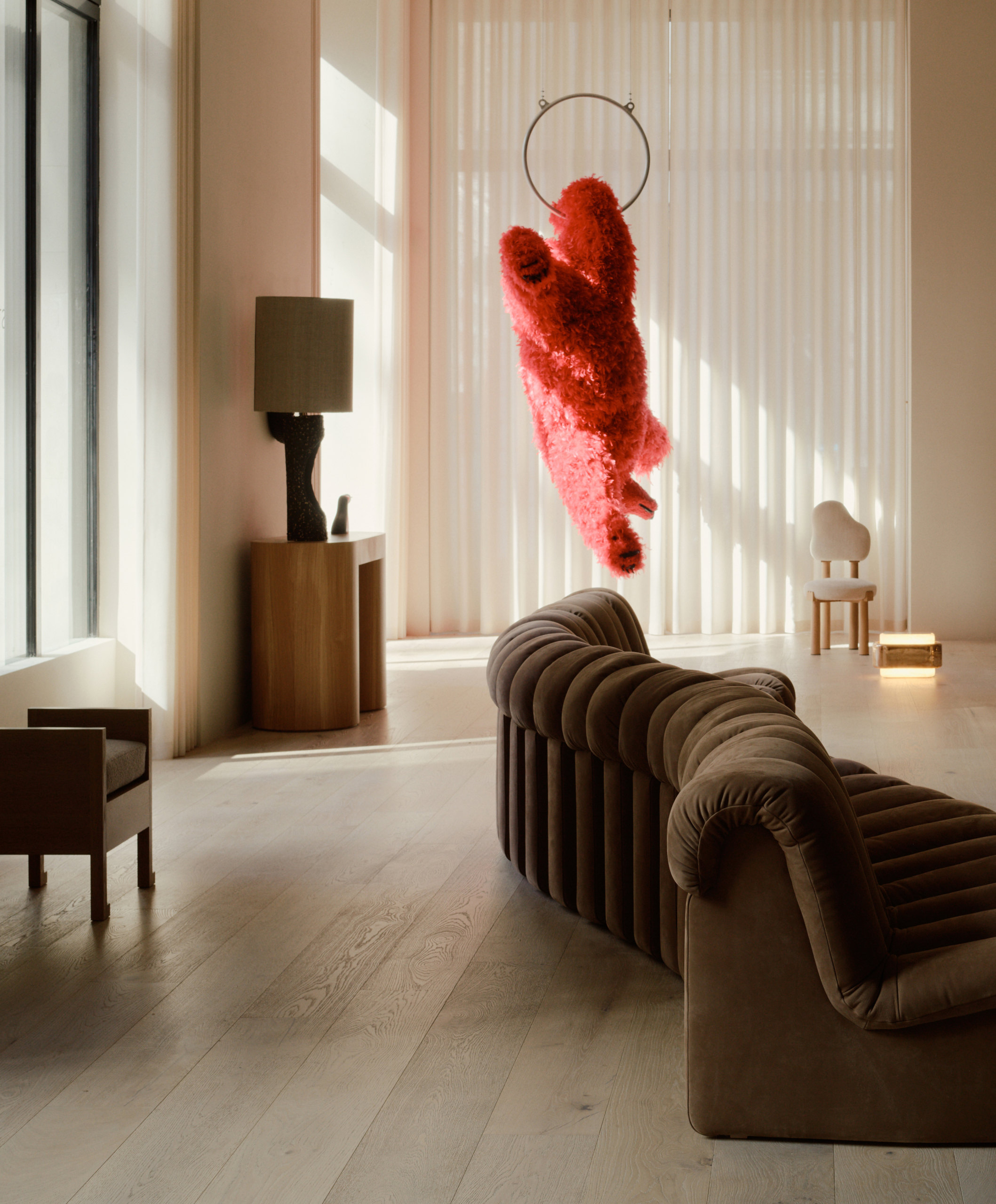
STUDIOTWENTYSEVEN – New York Gallery
ON VIEW
DS-600 sofa by U. BERGER, E. PEDUZZI RIVA, H. ULRICH & K. VOGT 1972 – Apis bench by MAX ZINSER – Silo console by HERVÉ LANGLAIS, limited edition 12 – Beaune bronze table lamp by THIERRY LEMAIRE – Agatha chair by MARTIN MASSÉ, numbered edition – Tower of babel lamp by PIERRE-YVES GUENEC, limited edition 12 – hanging sculpture and bronze sculpture from NACHO POLO & ROBERT ONUSKA private art collection – PAOLA PIVI, That’s what I do for fun, 2020. not for sale – CAMILLE HENROT, Self Organizing, 2014. not for sale.
What was the initial vision behind founding STUDIOTWENTYSEVEN, and how has it evolved since its inception?
I founded STUDIOTWENTYSEVEN in 2018, initially to spotlight Scandinavian designers who had not yet been introduced to the U.S. market. About a year later, Robert joined me. From the start, our goal has been to create a space where collectible design felt as intimate and emotional as fine art. Our focus has expanded globally, guided by a shared love for minimalism, warmth, and storytelling. Many of the designers we first collected are now part of our gallery’s program, showing how the gallery reflects our own aesthetic. Our New York home, just across the street from the gallery, mirrors the vibe of the space, with both constantly influencing each other. We’ve grown into a platform that champions emerging and established voices, presenting design as something emotional, tactile, and personal.
STUDIOTWENTYSEVEN currently has locations in New York and Miami. How do these different cities influence the aesthetic, artist selection, and collector demands of each gallery?
Each city offers its own rhythm and cultural perspective, which naturally shapes how we program and present. Our New York space, with its expansive scale and immersive interior design—personally overseen by Robert and me—allows for bold, sculptural installations. In contrast, our Miami gallery embraces a more traditional white-box format, offering a clean, minimal backdrop that lets each piece speak for itself. While we maintain a cohesive aesthetic across both locations, we adapt to the local energy and collector base, ensuring every presentation feels intentional and contextually resonant.
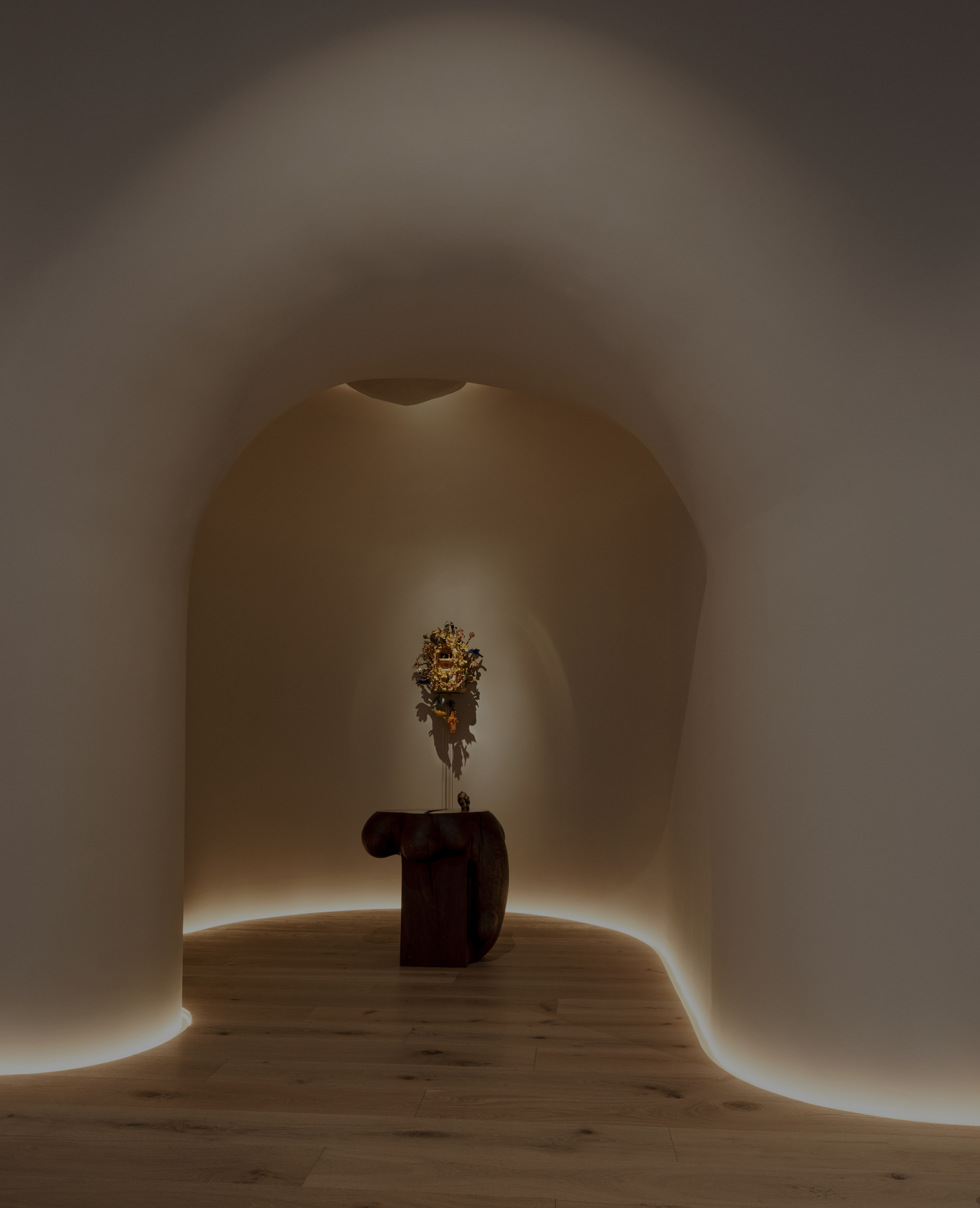
STUDIOTWENTYSEVEN – New York Gallery
ON VIEW
Rotunda the great console by CHARLES HAGERMAN, unique work – Sisyphos alcidae bronze jewelry box by VICTOR GUEDY, limited edition 8 + 4 ap – Clock from NACHO POLO & ROBERT ONUSKA private art collection – KATIE STOUT, commissioned cuckoo clock, 2021. Not for sale.
Both of your galleries presents works that challenge traditional notions of design and functionality. Do you believe art and design should disrupt expectations rather than merely complement a space?
Absolutely. We believe design should evoke curiosity and dialogue—it should challenge just as much as it comforts. Our spaces aren’t designed to feel like traditional galleries; they are meant to feel like lived-in, layered environments where every object has a presence and a point of view. When design surprises or unsettles, it creates a deeper, longer-lasting relationship between the work and the person experiencing it.
You’re now fully embracing the STUDIOTWENTYSEVEN project with Robert Onuska. How do your creative visions complement each other, and what is your collaborative process like?
We complement each other perfectly. From the beginning, our approach has been fully collaborative—we make almost every decision together, from the business strategy to the design direction. We discuss every detail, from selecting artists to how each piece is styled and presented. That shared refining process is essential to what we do. Our personal and professional lives are closely connected, and we only acquire or show work when we both feel a deep, mutual connection to it.
How do you discover new artists and designers for your galleries? What criteria do you consider essential when selecting new talents? Does your vision prioritize established artists, or do you actively seek emerging talents who push the boundaries of contemporary design?
We’re drawn to pieces that have a timeless quality, where you can feel the craft but still see something fresh. We often start with a material or technique that catches our eye, and that curiosity leads us to new collaborations. At the end of the day, every piece we showcase is something we’d want in our own home. We believe in a balance. We’re honored to work with established talents, but we’re equally excited about supporting talented designers at the beginning of their careers. What matters most to us is vision.
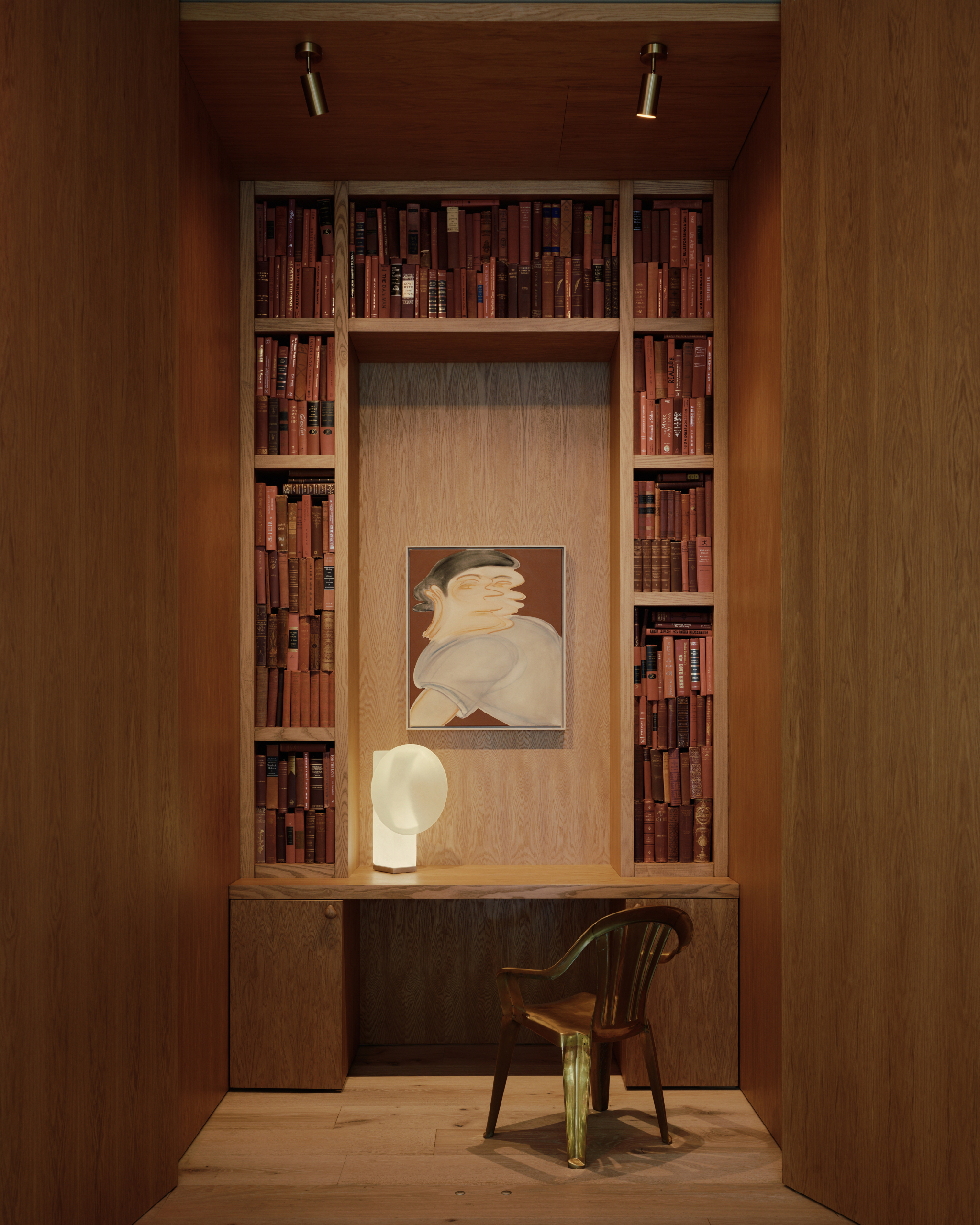
STUDIOTWENTYSEVEN – New York Gallery
ON VIEW
Library by NACHO POLO & ROBERT ONUSKA – Vintage books monoblock bronze chair by LUNA PAIVA, numbered edition vestige Cast Crystal Table Lamp by ROSS GARDAM, limited edition 5 + 1ap – painting from NACHO POLO & ROBERT ONUSKA private art collection – ANASTASIA BAY, gym portrait ii, 2022. not for sale.
What is the most unexpected or unconventional piece you have exhibited at STUDIOTWENTYSEVEN? What made it stand out?
One that stands out is the Artichoke Chandelier by Prateek Jain & Gautam Seth. It’s a striking example of how design can transcend function to become something emotionally resonant and visually transformative. Pieces like that remind us why we do this work—they reframe what functional design can look and feel like.
Many people approach interior design with a focus on harmony and coordination. Do you think a designed space should also challenge the viewer, like a thought-provoking artwork?
Yes, harmony matters, but the spaces that really stick with you usually have a bit of tension. It’s that mix of beauty and complexity that makes something memorable. The most interesting environments aren’t the ones that feel too polished—they’re the ones that surprise you and make you feel something a little unexpected.
Do you believe an object’s aesthetic appeal should be its primary function, or should it also convey deeper meaning and symbolism within a space? How do you see the relationship between contemporary art, collectible design, and everyday functionality evolving in the next decade?
Aesthetic appeal is the first layer—what really makes a piece lasting is the meaning behind it. We believe the future of collectible design lives in that balance between sculpture and soul—pieces that aren’t just beautiful, but that spark something, tell a story, or bring up a memory. As the lines between art, design, and everyday life keep blurring, we see homes becoming more like personal galleries— spaces that reflect who you are, where every piece carries its own emotional weight.