
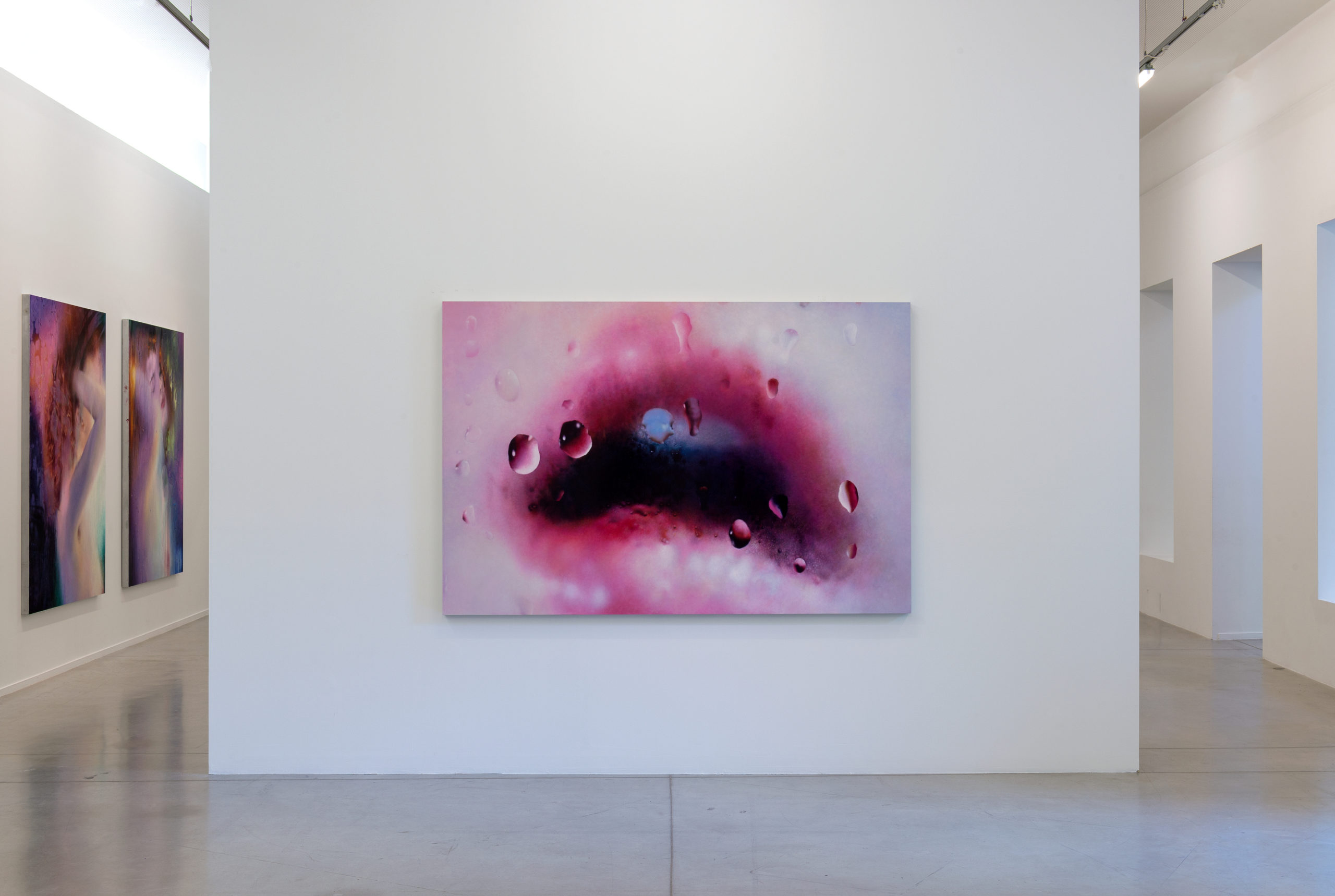

JENNIFER HIGGIE BOLDLY PAINTS UTOPIA: HOW WOULD ART AND THE WORLD UNFOLD WITH WOMEN IN COMMAND
Project by Niccolò Lapo Latini
JENNIFER HIGGIE, London, 6th May 2025 // In the quiet of her flat in the heart of the British capital, immersed in the soft shades of cream and sugar-paper blue of her furnishings and walls, surrounded by her most cherished books and paintings // Following the release of The Other Side: A Story of Women, Art and the Spirit World in the USA, Mary Gabriel’s wonderful review in The New York Times welcomed the book as ‘rich in veins of optimism and wonder,’ while Katy Hessel, author of The Story of Art Without Men , praised it as ‘A radical, fascinating exploration of art and the otherworldly, A brilliant reclamation of female creativity.’
To quote the legendary Spanish tennis champion Rafael Nadal, who wisely remarked in one of his post-match interviews at Wimbledon 2019 regarding the wasted, never truly realized talent of the eccentric and fierce Australian Nick Kyrgios: “If, if, if doesn’t exist.” Too many “ifs” are presented to us by today’s society and the media, at our dinner tables, on our sofas, in evening gatherings, during the morning news at the local café with a warm cappuccino in hand, while the television hums loudly in the corner. If only we hadn’t joined the Euro, if only we hadn’t left the European Union, if only they hadn’t invaded that country, if only they hadn’t carried out that attack. Reality cannot be altered by us; events flow forward, swiftly, towards a singular direction, one for which we were never consulted to take a stance. Yet, recalling the first female Prime Minister of the United Kingdom, who, in the 1980s, with her fiery rhetoric, intimidated the men in their suits and ties, so firm and assured in their seats, sometimes, both Jennifer Higgie and I find ourselves wondering: Why not in the art world, why not in politics, why not in business? But women, alas, may be too astute to place themselves on the same level as men. Perhaps that’s why they sometimes prefer to remain apart, quietly chuckling beneath their breath at our colossal and clumsy missteps.
“If you want something said, ask a man;
if you want something done, ask a woman.”
Margaret Thatcher (BBC, 1982)
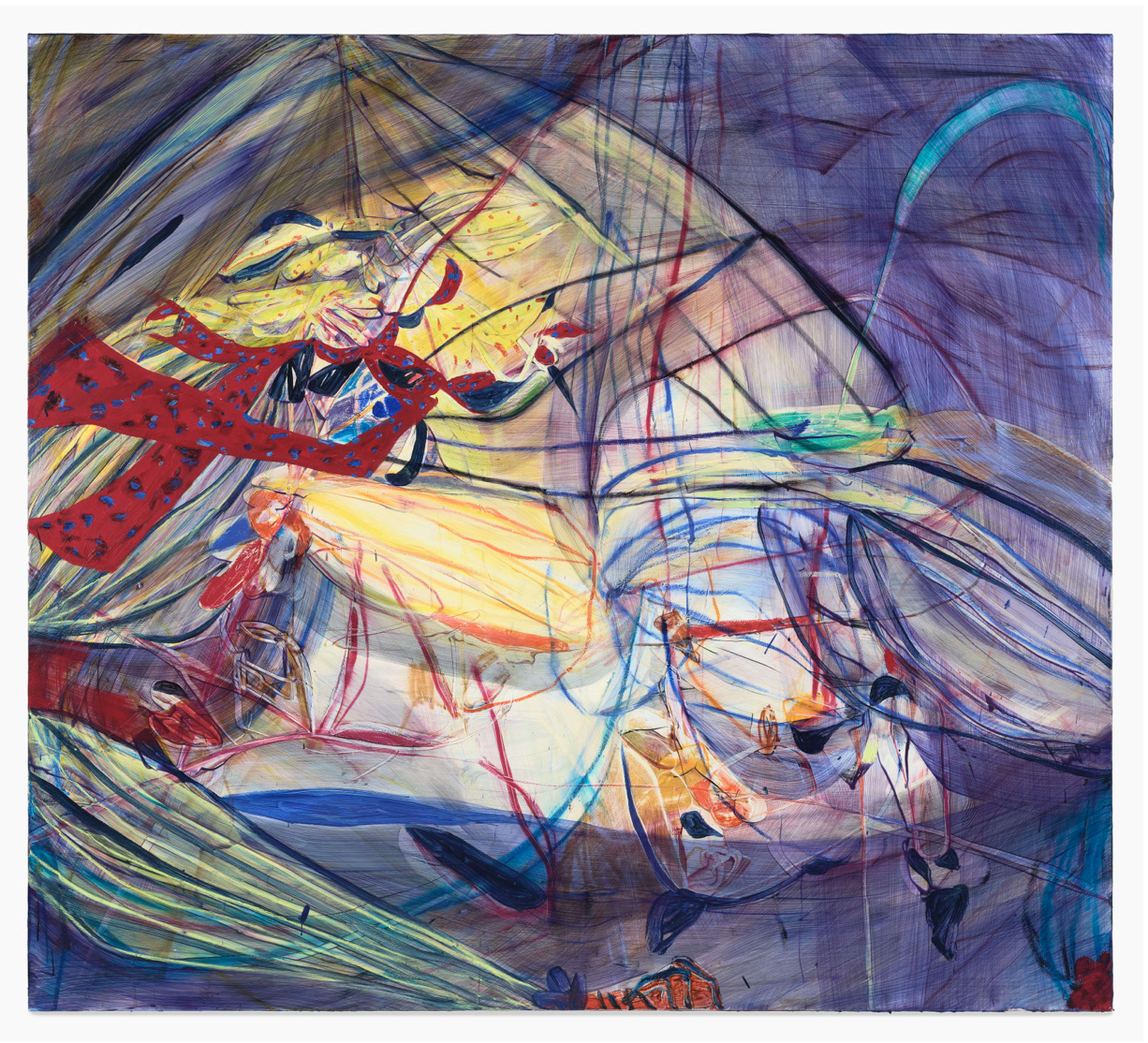
Essay for Jadé Fadojutimi_Pippy Houldsworth Gallery_London.
Jennifer, you’ve written about many forms of art, but painting seems to hold a special place in your heart. What fascinates you so much about it compared to other creative disciplines in the fine arts?
Well, you’re absolutely right, Niccolò. Painting has always been very close to my heart. I actually studied painting for six years at art school in Australia. I did my undergraduate degree in Canberra, studying painting, and then I completed my MA in Melbourne for two years in painting as well. There’s something about it, I think, in this hyper-connected and hyper-digital world that we live in, that can’t be reproduced. It can only be made slowly, in the flesh. Even if you see a reproduction of it on a screen, you’re not experiencing it the way it should be because it’s been made smaller, flattened, and glossed over by the digital screen. So the only way we can really experience painting is in person. There’s something so intimate, handmade, and profound about painting in the fastpaced world we live in. That’s why it keeps drawing me back to it. You can’t rush a painting.
And what about the major artists who shaped and characterized your view on this concept?
I remember when I was studying painting and I first traveled around Europe as a student. I saw a big exhibition of Giorgio Morandi’s still lifes, and I remember it sort of enraging me. I thought, why would someone spend 50 years painting this small arrangement of objects on a table? I didn’t understand it. It seemed like a crazy thing to do. But as I walked around the exhibition, thought about it, and read more, it stayed with me more than any other exhibition because it really challenged something in me. Now, Morandi is definitely one of my favorite painters of all time. I love his intimacy, his quiet, his powers of observation, and what he can do with such a limited palette. He definitely challenged me when I was a young art student. And then, as I got older, I became fascinated with the history of women in art. I became very interested in Sofonisba Anguissola, the Italian Renaissance artist. She’s extraordinary, and her self-portraits are amazing. She was working at a time when women had little to no political agency, and she made these incredible self-portraits. She was probably the greatest self-portraitist between Dürer and Rembrandt. I didn’t learn about her at art school, though. It was only in recent years that I began to explore her work. Another huge influence was Hilma af Klint. I saw her exhibition at the Moderna Museet in 2013. Her communication with the spirit world and her exploration of abstraction at the turn of the century was amazing. Her work is astonishing, life-affirming, and strange. I love her paintings.
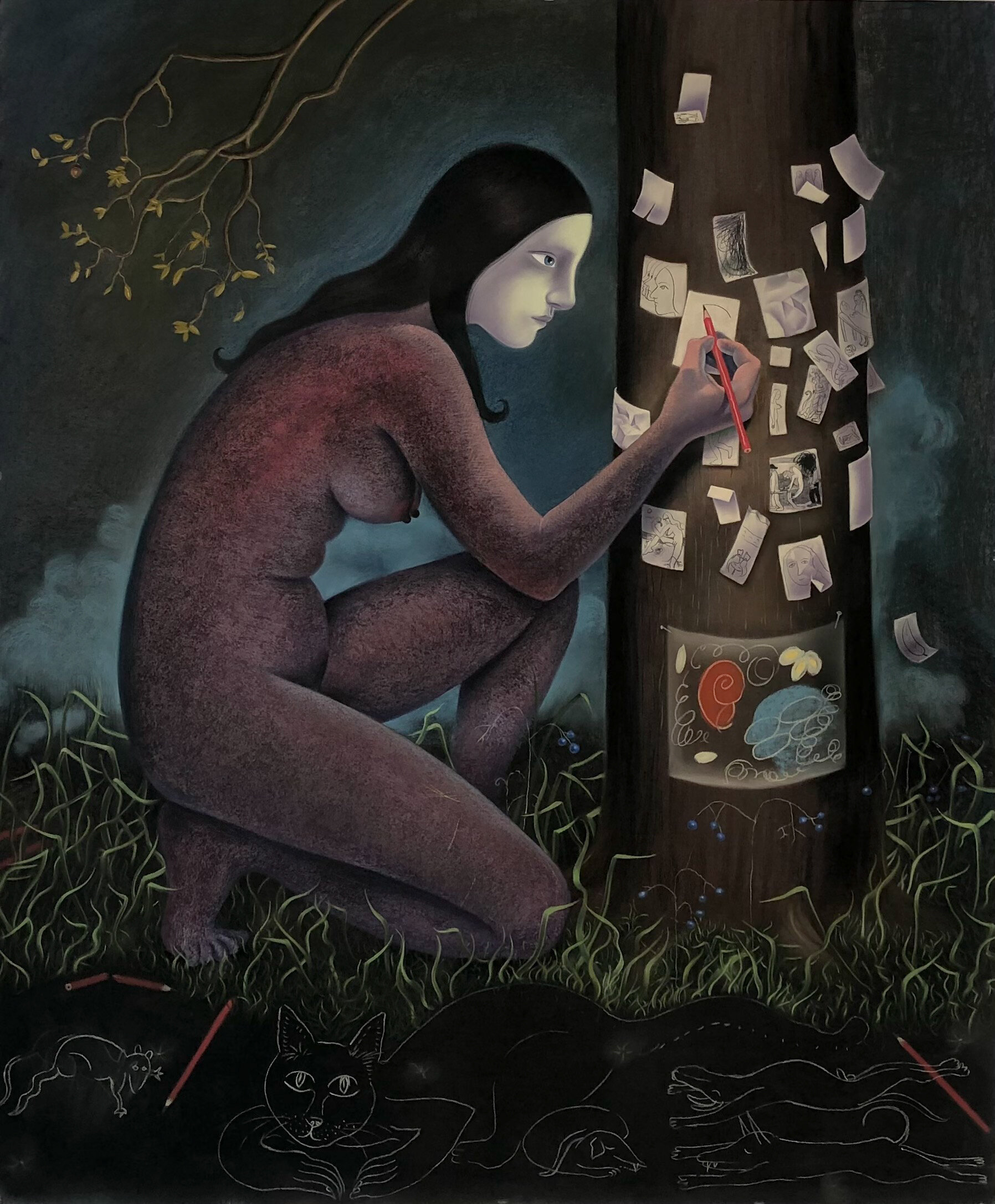
Essay for Sara Anstis_Fabian Lang_Zurich.
In your writings, you often explore the role of women in art. What particular trait do you think has changed compared to the past status quo, and what still struggles to change in the creative business?
I think one of the most exciting things about art right now is that we now view art history as a work in progress, not something carved in stone. For a long time, art history was essentially about white men writing about other white men. Not that these white men weren’t incredible thinkers, and the artists they wrote about weren’t worth studying—of course, they were. But now, the concept of art history has expanded to consider all human endeavor, examining the exclusions of women, different races, and various geographical locations. There’s a re-examination of what high and low might mean. In terms of looking at art now, it’s very exciting. The more we explore the women who contributed to art history but were excluded from traditional narratives, the more we can uncover.
Nowadays, many female artists receive international recognition in honor of their careers and milestones of success. Do you think this visibility is truly equal compared to the celebration of male professional paths, or is there still a dominant narrative?
Things have massively improved in recent years in terms of women becoming much more visible in galleries and acquisitions, as well as the reassessment of art history to include the achievements of women. But there’s still a long way to go. Even though it seems like there are a lot of women being shown, if you look at the breakdown of major museums, men are still far more visible than women. Male artists still command higher prices at auctions, and most major museums’ collections are still heavily skewed toward men. Sometimes it feels like it’s not really established or consistent. It happens that the movements or systems push for women artists for a year or so, but then it fades away, and it doesn’t feel solid. I remember seeing an exhibition in Florence a few years ago that explored 20th-century Italian art, but it didn’t include any Italian women artists, which I thought was really strange, considering how many brilliant women have made art in Italy. These things are still around us; the idea of history is still predominantly male-centered, definitely.
How do you envision the evolution of the female figure in society today? And how do you think the male imagination will respond to these changes?
That’s a huge and delicate topic. It really depends on where we’re talking about. In the West, women are now much more involved in politics and at all levels, but there’s still a pay gap. Women don’t get paid as much as men, and that needs to be addressed. But, of course, in other parts of the world, it’s much worse. Look at what’s happening in Afghanistan—it’s barbaric how women are being treated there. There’s still a long way to go. In terms of the male imagination, many men are allies of women and have been very supportive of women’s achievements and visibility, but other men see women as a threat. Where they perceive the power of women, they crack down even harder.
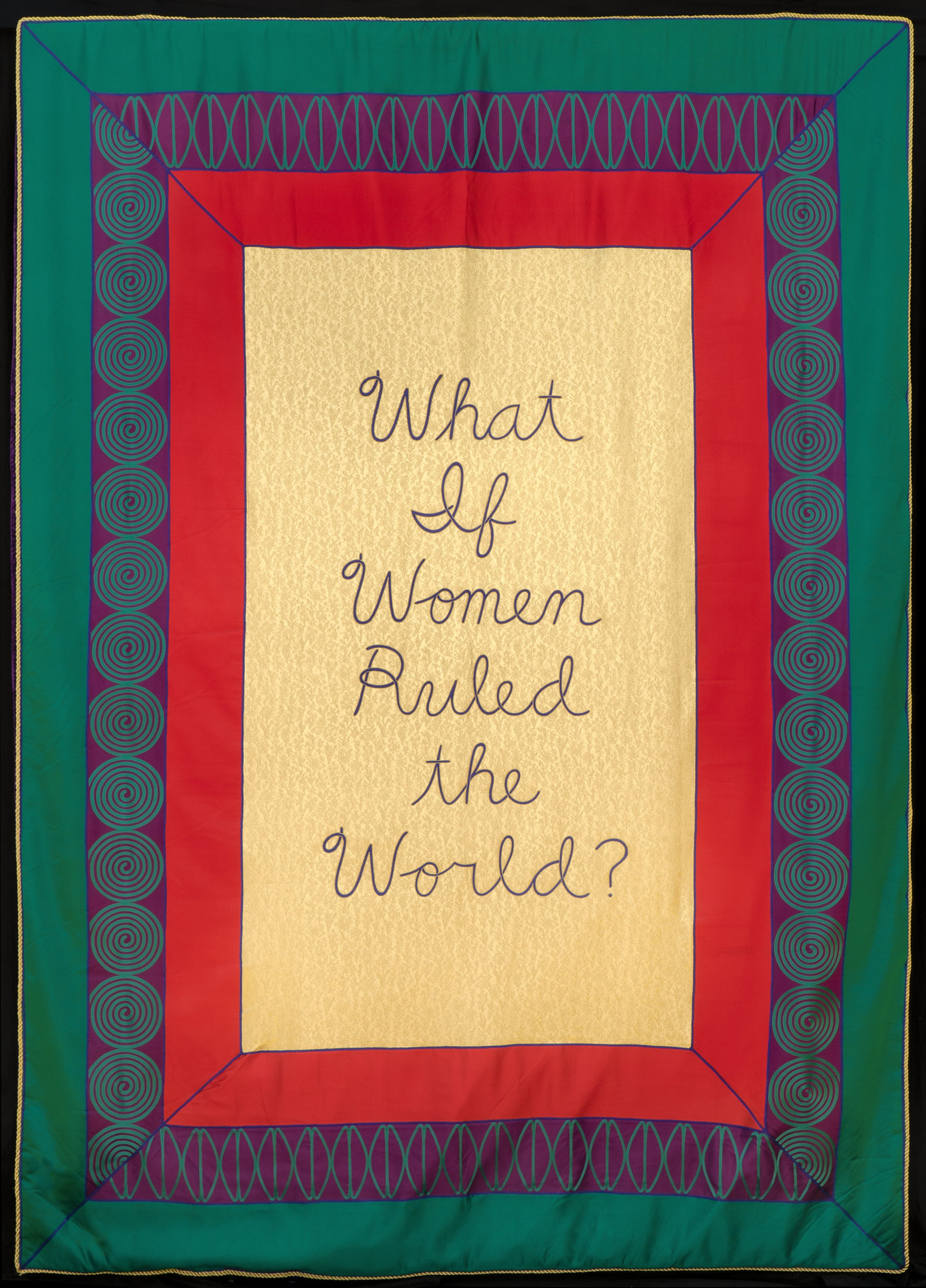
Essay for Judy Chicago_New Museum_New York.
From your personal perspective, how would the history of art have developed without men? And, even more striking, how do you think the history of the world would have been shaped without men?
That’s a utopian question, but it’s also interesting to imagine. I’m actually hesitant to generalize too much about women. There are as many different women as there are women in the world. Some are power-hungry, some aren’t, some are softer, some are harder. But, if we’re imagining what society might have looked like without patriarchy, I hope it would have been less obsessed with vengeance. Vengeance is one of the most corrosive things in the world today. The systems of violence that have existed for thousands of years are still present; the technology has just changed. Maybe a woman-centered society would have found better ways of conflict resolution. It’s idealistic, but that’s what I’d hope. Maybe wars and totalitarianism would have been less frequent with women in control. It’s hard to say, Niccolò, but it’s still a thought.
The relationship between men and women seems to be going through a period of tension, but also of redefinition. What do you think are the biggest challenges still? The bonds between father and daughter, husband and wife, brother and sister have changed a lot in recent decades. What are your thoughts on these dynamics of communication today?
It’s hard for me to answer because, obviously, it’s important to remember that the situation differs in every family and relationship, and it varies according to the culture and traditions of each people. But there is now an assumption, especially in the West, that women have equal power to men. Even in the most oppressive families, that’s something people would hopefully recognize. I can see that the waters are shifting and awareness is growing.
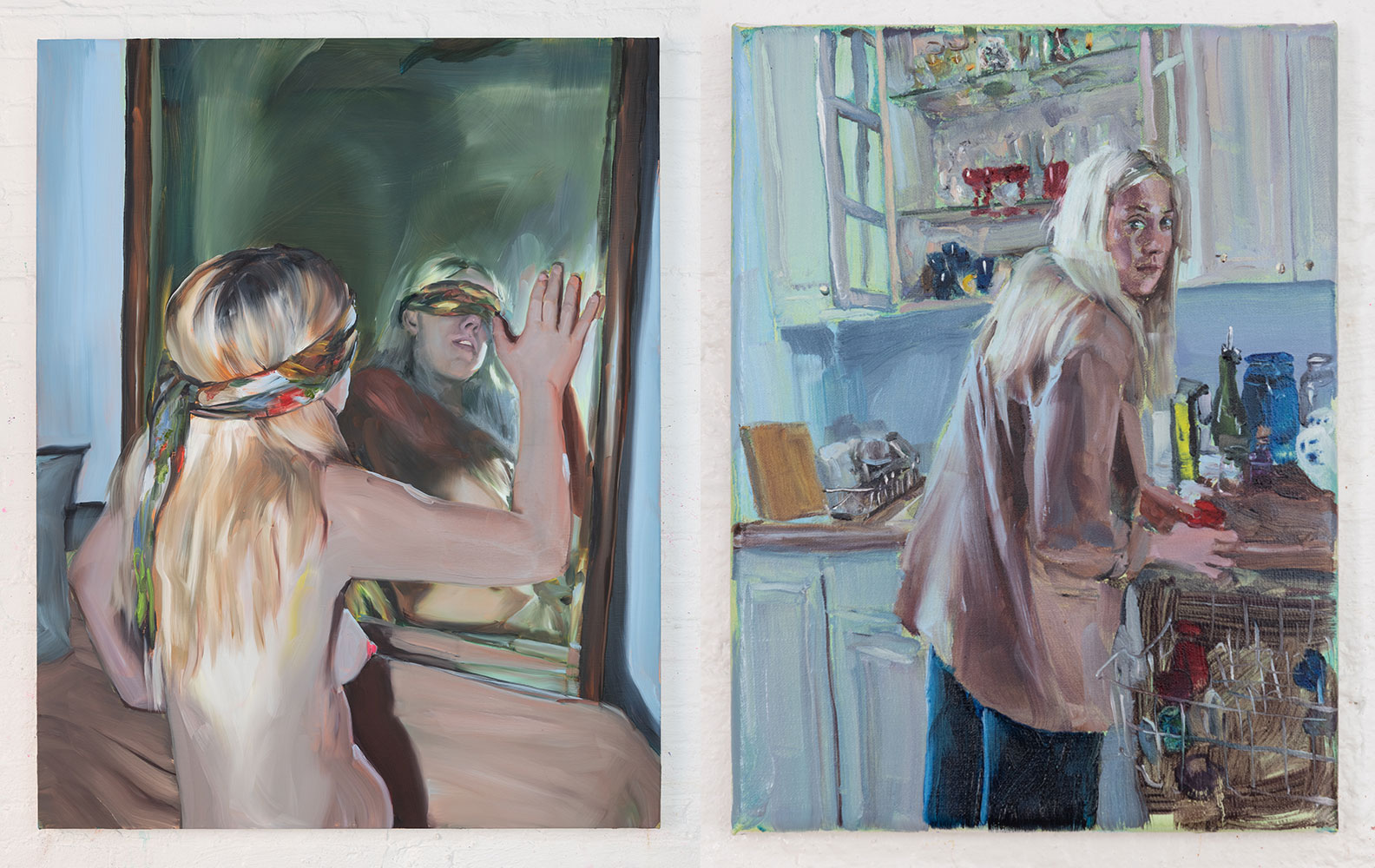
Essay for Jenna Gribbon_GNYP Gallery_Berlin.
Your books, The Mirror and the Palette and The Other Side, tell stories of women in the world of art. What inspired you to explore these stories and pass them on to the public, assuming the responsibility of an indirect witness?
Both books stem from my deep interest in the history of female artists. In a way, they were a means of educating myself about these histories, as they weren’t taught to me during my own education. The Mirror and the Palette focused on self-portraiture as a way for women to represent themselves when they were denied political agency or access to life studios or apprenticeships. If they had a mirror and a palette, they could depict their own image. I am personally fascinated by these stories. The Other Side came from my research into spiritualism and its connection to feminism, and how spiritualism gave women a voice, which was highly unusual for that time. I was amazed by the automatic painting these women created, which prefigured abstraction and surrealism. Art history isn’t as tidy as it’s often presented. I was also exploring the pandemic, bushfires, and my personal journey, which intertwines with these stories.
Jennifer, if you could have a deep and meaningful conversation with any female artist from history, who would you choose and why?
That’s such a wonderful question! To be honest, I’d have to mention more than one artist to fulfill my desire. Sofonisba Anguissola, definitely. She’s so fascinating, and I’d love to talk to her about her life experiences, especially her time traveling to Spain. I think she was a very independent and strong woman. As for a historical figure, I’d choose Christine de Pizan. She was the first female novelist and wrote a book called The City of Women, imagining a society ruled by women. It’s a dream story, and I’d love to hear more about her perspective. And if I could add one more, it would be Hildegard of Bingen—a German abbess, composer, philosopher, mystic, and visionary. She is considered one of the greatest female polymaths of the Middle Ages. She was truly extraordinary.