
MEASURED BEAUTY, ENDURING CALM: THE SCENTED SILENCE OF THE WORLD OF MORO DABRON
Project by Niccolò Lapo Latini
MORO DABRON, London, 18th July 2025 // From the heart of London and its quietly storied gardens, Moro Dabron mark a turning point in their studio’s evolution with their first collection of Cloth, Furniture & Lighting // Austin Moro and Eliza Dabron unveil a new chapter not as a departure, but as a quiet extension of an ongoing language—one where scent, form, and memory converge, threaded with echoes of Roman bronze and Pompeian fresco. Rooted in the emotive resonance of Howard Hodgkin’s Bloomsbury studio, the collection deepens their dialogue between past and present, surface and spirit.
Austin Moro and Eliza Dabron have long navigated the delicate interplay between memory, materiality, and atmosphere, crafting objects that speak softly yet profoundly to our senses. Their work draws from a rich tapestry of history and personal narrative, weaving echoes of classical forms and quiet British landscapes into contemporary design. With the launch of their first collection of Cloth, Furniture & Lighting, Moro Dabron take a decisive step forward, expanding their language beyond scent and sculptural objects into a tactile world of texture, form, and light. Rooted in the emotive spirit of Howard Hodgkin’s Bloomsbury studio, this collection is not just a new chapter but a deepening of a journey—where craftsmanship and restraint converge to evoke enduring calm and thoughtful presence. Each piece is a meditation on balance: the soft radiance of mouth-blown glass, the sculptural sweep of an armchair backrest, the organic vitality of an acanthus leaf cast in bronze. These are objects that do not shout but invite reflection, embodying a quiet grandeur that elevates the everyday. In Moro Dabron’s hands, design becomes a vessel for memory and feeling, a dialogue between past and present made tangible through light, texture, and form.
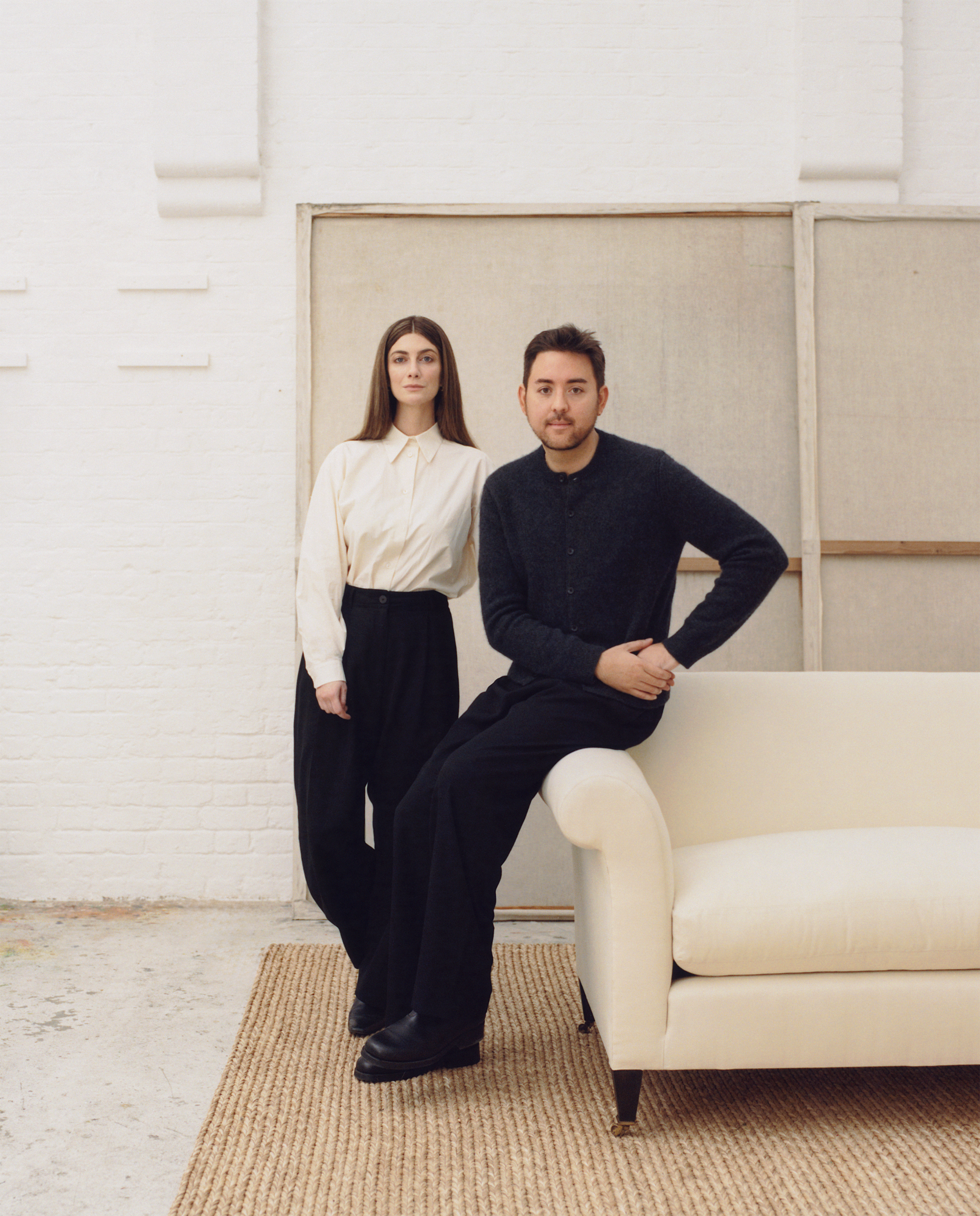
Moro Dabron by Harry Crowder.
How did you two meet, and what led you to form Moro Dabron together? What’s the personal story—your individual paths—that eventually became a shared narrative?
We met while working at Alex Eagle Studio in London. It was a formative environment—one that encouraged an intuitive approach to design, spanning interiors, fashion, and objects. Over time, we realised we shared a similar sensibility: an interest in atmosphere, materiality, and the quieter details that often go unnoticed. What began as a professional collaboration naturally evolved into something more personal and focused. Moro Dabron came out of that shared perspective—a desire to create pieces that feel considered, understated, and rooted in feeling as much as function.
How do you divide creative responsibilities between you? Where do your strengths diverge— and where do they meet?
Our roles have evolved quite naturally over time. Austin leads on design, shaping the physical form of our pieces, refining proportions, and working closely with makers. Eliza focuses more on the storytelling side—how the brand speaks, how it’s seen and understood, from visual language to communications. That said, we’re constantly in conversation. There’s a shared vision that underpins everything, and we each bring a slightly different lens to it. The overlap— between object and atmosphere, design and narrative—is where the most interesting work happens.
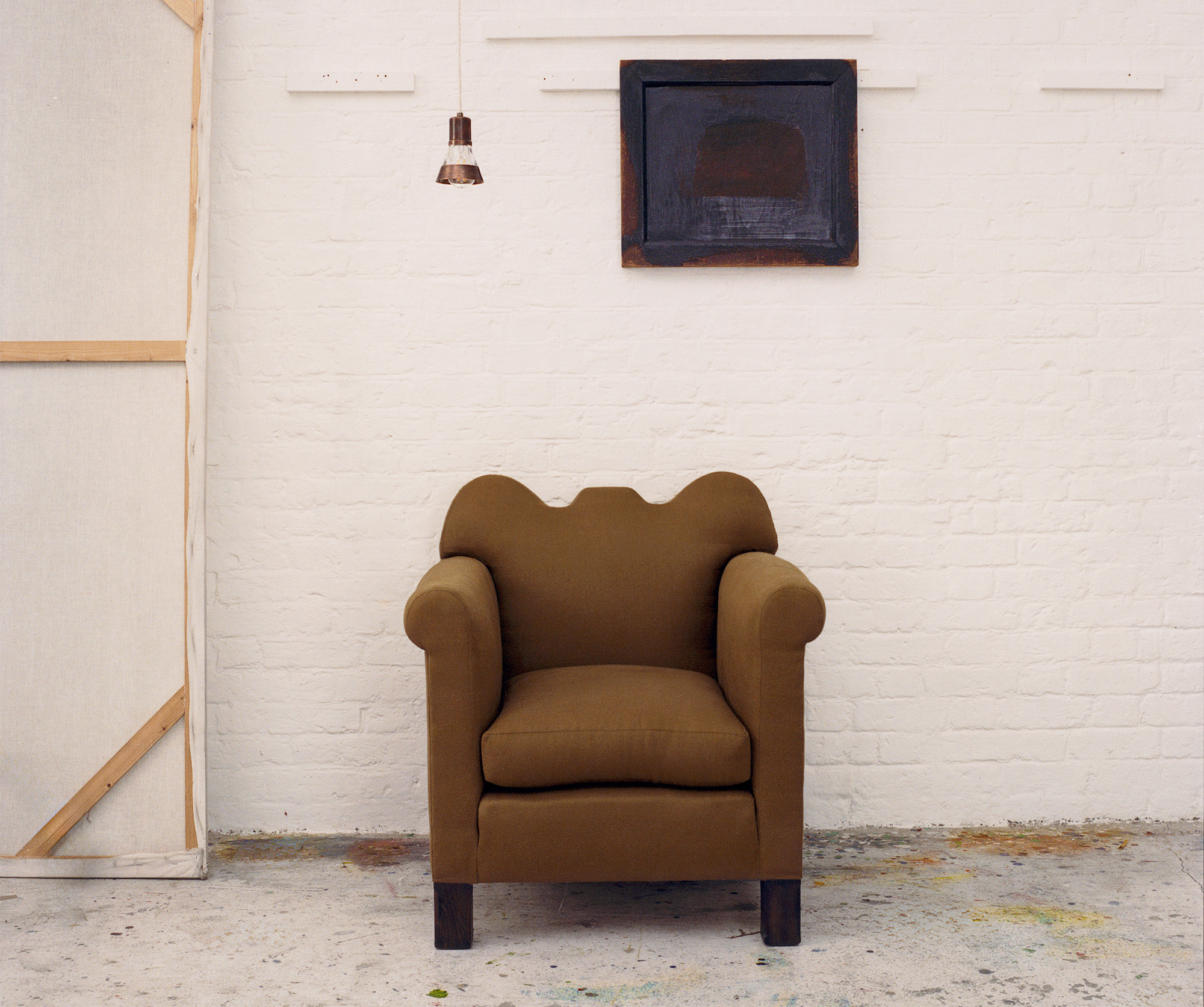
Moro Dabron by Harry Crowder.
Your early work focused on sculptural candles and fragrance. How do scent and form speak to one another in your process? What connects a shape to a fragrance on a sensorial or even synesthetic level?
We think of both as vessels for memory. A fragrance has its own architecture—top, heart, base —just as a sculpture has profile, mass, and void. When we design a candle, we’re not simply casting wax, but shaping a moment: a composition that carries scent, light, and form into the atmosphere of a room. The fragrance is often transportive—inspired by gardens, interiors, and half-remembered landscapes—while the vessel brings historic forms into a modern context. Some draw on the work Constance Spry created for Fulham Pottery: expressive, sculptural pieces that echo the unruly beauty of her floral arrangements. Together, the object and its scent act as a prompt—something quiet and elemental, designed to stir memory.
Many of your pieces feel deeply poetic yet restrained. Is there a particular emotion or atmosphere you consistently strive to evoke?
We’re drawn to spaces and objects where beauty emerges through the simplest notions—line, proportion, and the character of the material. The harmony of Georgian design, the utility of the Shakers, the purposefulness of the Arts and Crafts movement—these are lasting reference points. It’s less about a fixed emotion than a certain atmosphere: calm, orderly, and quietly enduring. Something considered, but never fussy.
What role does English heritage or landscape play in shaping your visual language? Also, is there a piece of art, literature, or music that you keep returning to when designing?
The English landscape is an emotional backdrop to our Apothecary work—its veiled light, muted greens and greys, and layered history. We often return to the paintings of William Nicholson. His work shares something of our tonal register: reflective, restrained, and rich in surface and tone, but never overworked. There’s a balance in it—structure with softness, ornament held in check, a kind of warmth that holds your eye. That sensibility continues to shape our visual communication and how we think about scent.
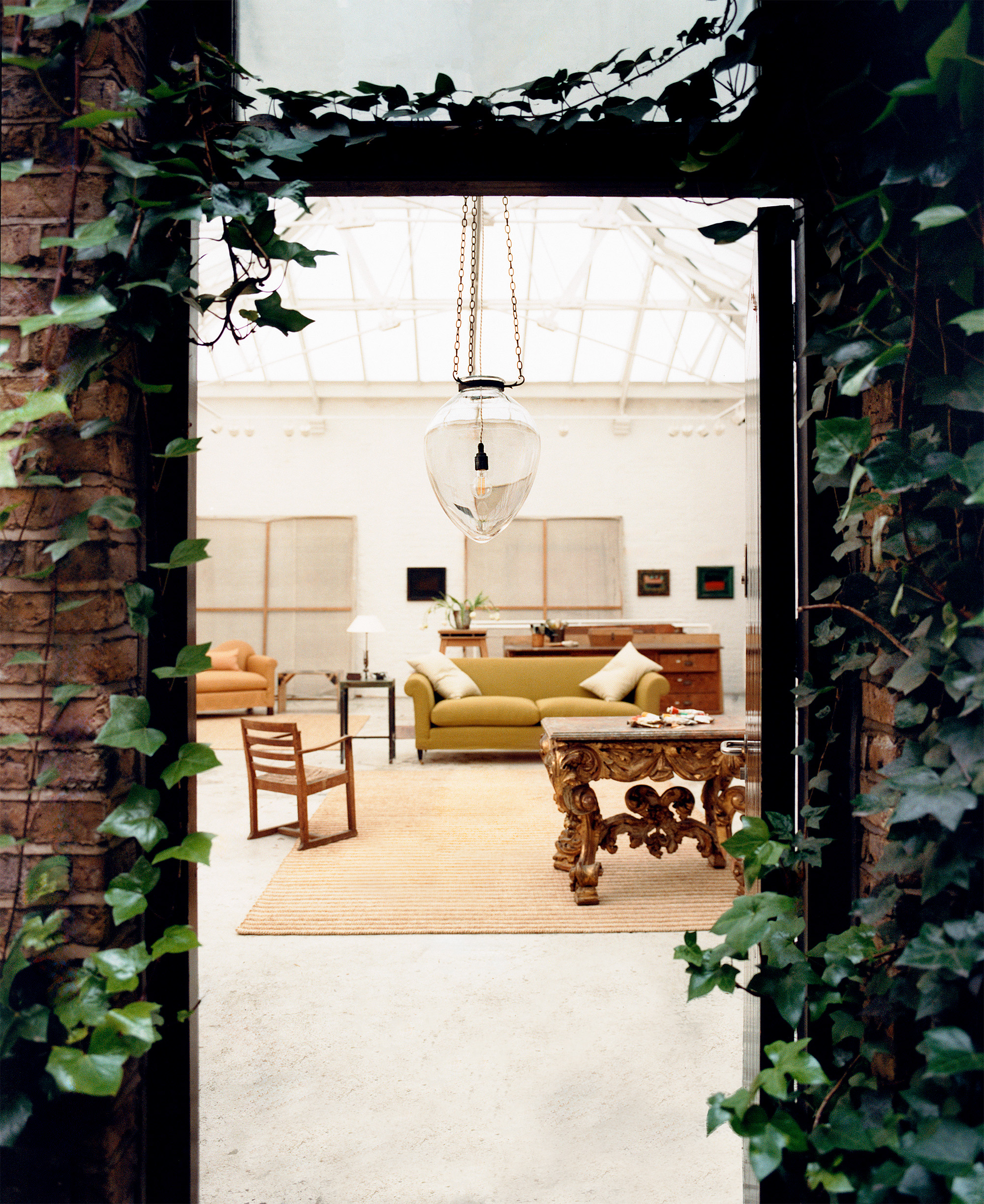
Moro Dabron by Harry Crowder.
What’s something people often misunderstand about quiet, minimalist design?
It’s often mistaken for something sterile or aloof. In truth, it demands a sensitivity to detail, to material, to atmosphere. Minimalism isn’t absence—it’s presence without noise. It asks more of what remains.
The press release describes this first collection as “a continuation” rather than a beginning. Can you elaborate on how this project extends your previous work?
The collection builds on the world we established with Apothecary—an expansion rather than a shift. Having worked in interiors for many years, it felt instinctive to let that experience surface more fully: cloth, furniture, and lighting through the same lens. It’s not a new language, but a broader expression of one we already speak.
Howard Hodgkin’s Bloomsbury studio plays a central role in the inspiration for this collection. What aspects of that space resonated with you most?
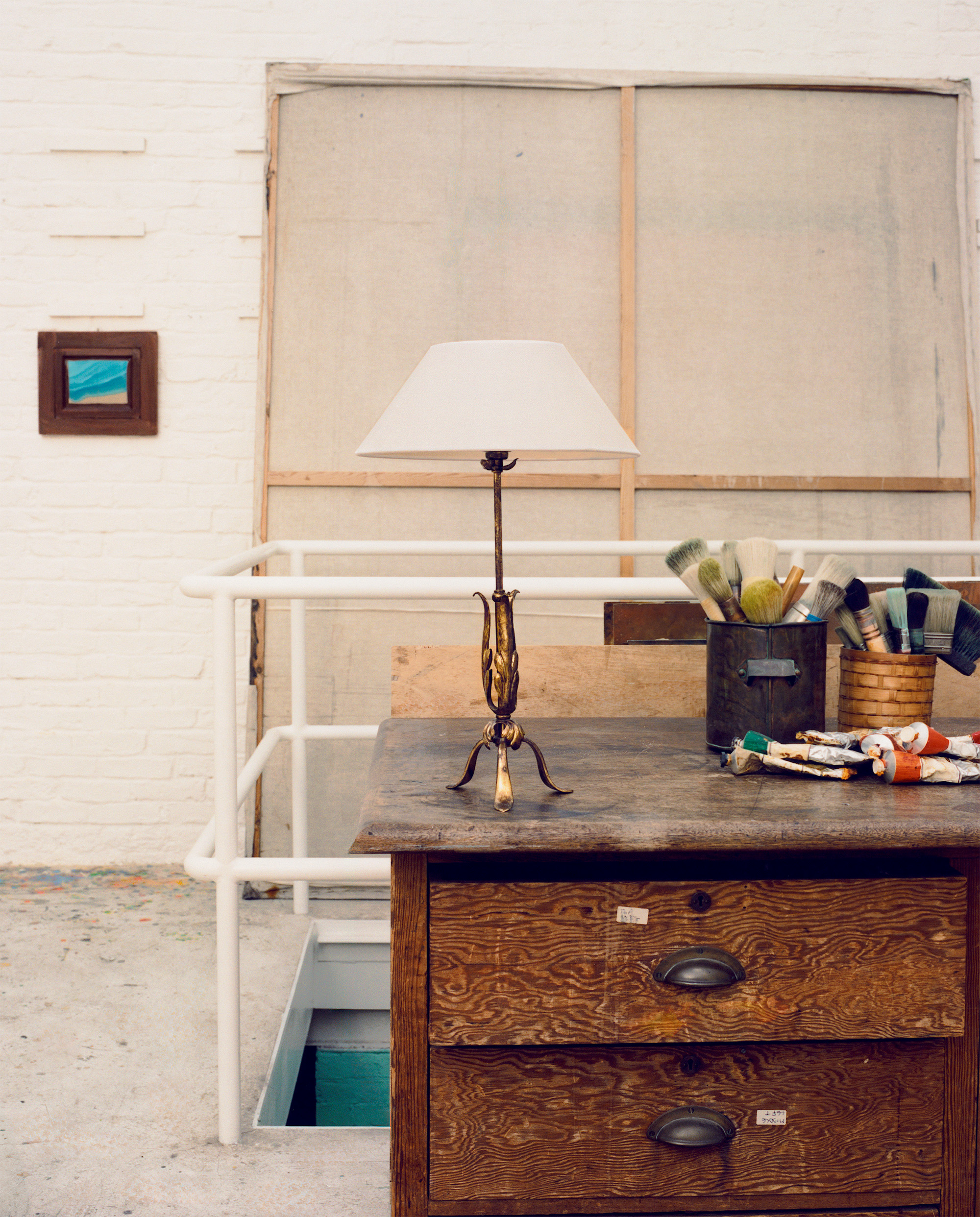
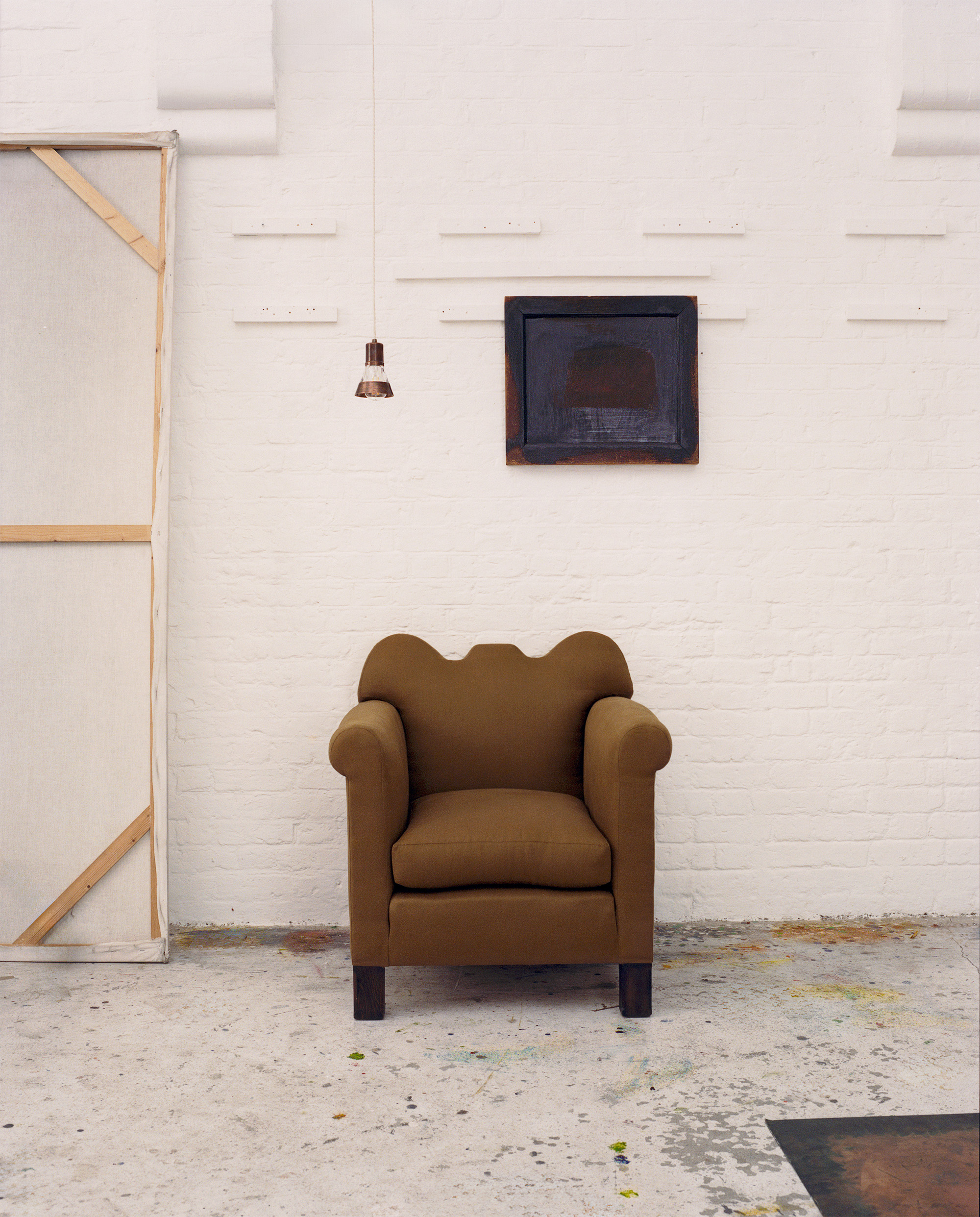
Howard’s studio—originally an 18th-century dairy—was refitted under his direction in the late ’80s. Its historic fabric remains, but the space was modernised: a glazed ceiling above exposed ironwork, walls washed in white. His abstract paintings sit among personal objects, each placed with deliberate care. That measured balance between structure and feeling, preservation and use informed our approach to the collection. We’ve drawn from antique forms, but interpreted them for the present—with the same clarity, economy of detail, and intent. It’s what made his studio feel like the perfect backdrop: not just visually, but in spirit.
Moro Dabron by Harry Crowder.
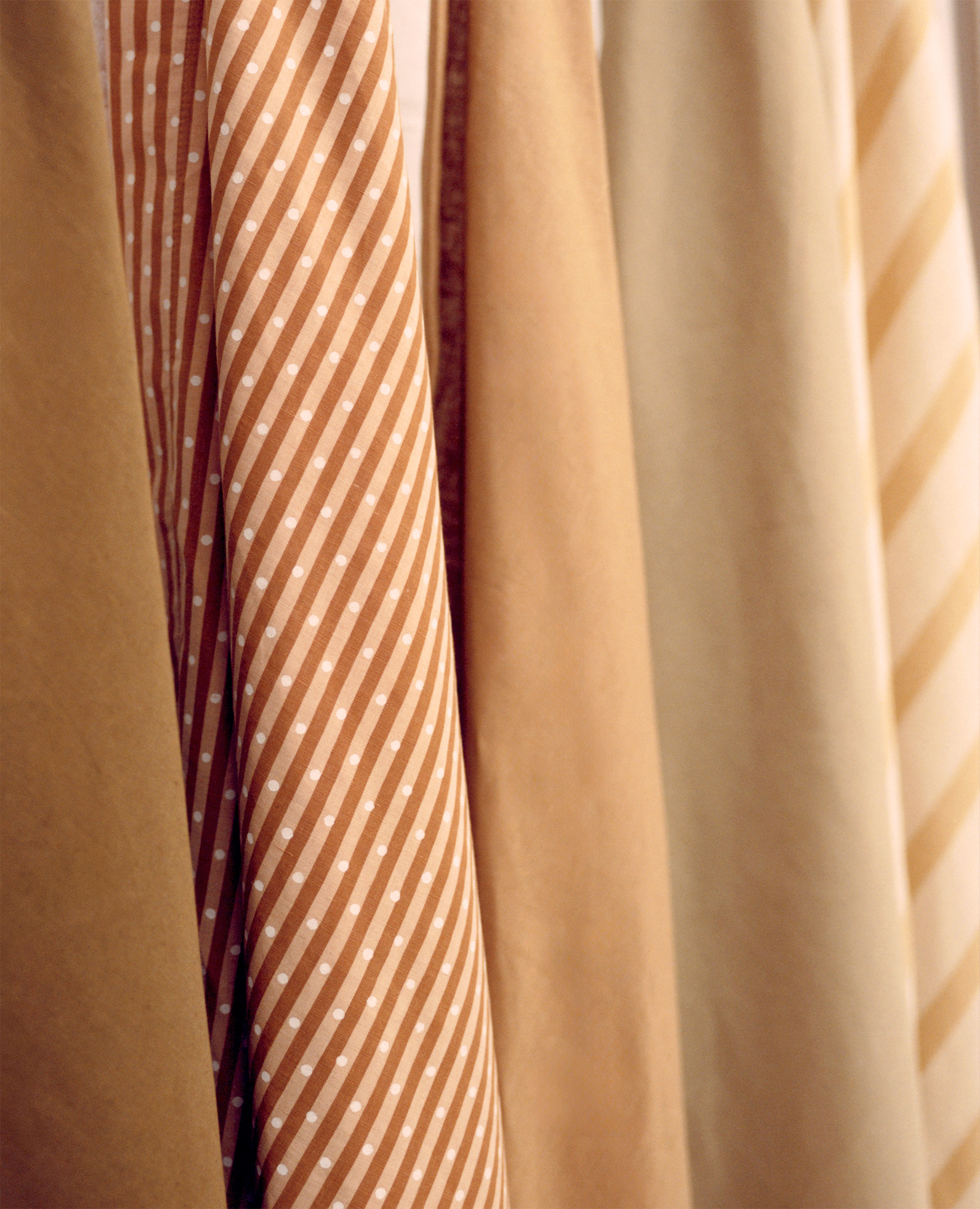
The fabric palette—names like “Oakmoss,” “Tailor’s Chalk,” and “Morning”—evokes strong emotional imagery. How did you approach the storytelling behind the textile tones?
Our hope was that each fabric could be as transportive as fragrance. Each name was chosen to suggest a place, a material, a moment in time. The aim wasn’t simply to describe the colour, but to connect it to lived experience—to offer a reference point that feels instinctive, even personal. A name that places the tone in memory, not just on the page.
Your lighting pieces, such as the Apothecary Globe and Blindfold Pendant, blend historical references with contemporary design. How do you decide which elements from the past to reimagine?
We try to stay open-minded to everything. A garish light from the Art Nouveau period, say, might become elegant when reduced to its lines and structure. References come from all over— from museums to the most unlikely of places. The point is to stay alert. It’s not about reproducing the past, but recognising what can be reimagined within it. Craftsmanship and materiality are clearly central—from horsehair upholstery to hand-blocked linen.
How do you balance material integrity with aesthetic expression in your pieces?
For us, material and aesthetic are inseparable. We’re drawn to processes that take time—mouthblown glass, hand-stitched upholstery, hand-blocked cloth—not just for their integrity, but for the quiet character they bring. There’s beauty in materials that speak of use, of care, of a slower pace. The aim is never aesthetic for its own sake, but to make things that feel deliberate and lasting.