

YABU PUSHELBERG AS GIOTTO’S PERFECT CIRCLE: PARTNERS IN CRIME OF SUBLIME GEOMETRY, A DANCE OF MAGIC SPARKS, THE TECHNICOLOR RAINBOW AFTER THE STORM
Project by Niccolò Lapo Latini
GEORGE YABU & GLENN PUSHELBERG, New York, 25th April 2025 // At Yabu Pushelberg’s New York studio and art gallery, established in 2001 and nestled in the vibrant heartbeat of Tribeca, Lower Manhattan // Riding the wave of their triumphs at the latest Milan Design Week—where the celebrated duo once again captivated audiences through their distinguished collaborations and luminous creations—their success breathes new life into a journey that began in 1980, in Toronto, and has since been crowned with milestones, notably their appointment as Officers of the Order of Canada and their induction into the Interior Design Hall of Fame.
Milan Design Week 2025 by Yabu Pushelberg: Theo (Molteni&C), Veloce (Zucchetti), Archie (MDF Italia), Sen (Leolux), Nagi (Salvatori), Ripple (Henge), Ami Extensions (De Padova), Willow Extension (Linteloo), Ollie Extensions (Glass Italia), Miles Extension (Lasvit), Hoshikage (Noritake), AYLA Collection Extension (CEA), Tessera (CC-Tapis).
I first met George and Glenn in Milan, at the Grand Hotel et de Milan on Via Manzoni, just a few hours before they were to depart for North Africa—to Marrakech, Morocco—after a glorious week in Italy’s fashion and design capital. Engaging with them, I was immediately struck by their vitality, spontaneity, and generous spirit—both human and artistic. Their energy sparked memories from my childhood, especially one vivid recollection: the thin cardboard box of Giotto Supercolor pastel crayons. With sharp color tips surrounded by light brown wood, they were the most treasured possession a little boy could carry in his pencil case. A symbol of value, brightness, joy, and passion. As we chatted in the grand hall over cream pastries, chocolate bites, and green tea, we shared memories of our first encounter with Luca Guadagnino. Listening to their story of a 45-year career, I was reminded of the power of patience—the power of knowing how to wait for what you deserve, knowing how to deserve what you desire. It was something echoed in one of Guadagnino’s recent films, Challengers, where a point you win with a winner holds the same weight as a point your opponent loses with an unforced error. It’s all about accepting without panic and waiting for the right moment and the right place. In a way, they fondly reminded me of my encounter with Fabio Novembre, architect and notable colleague of the Canadian duo. His words, as the founder of Studio Novembre and former AD of Driade, resonated during the inauguration of Milan Design Week. Speaking about the concept of Thought for Humans: “Home is a very abstract concept. The problem today is that humans consider home to be the piece of land they own. But I would rather consider the planet home. The more we feel connected to the environment and the people around us, the more chances we have for survival.” Yabu Pushelberg, in the world of design, is like the fish in the parable who has found its sea—it lives in its natural element, smiling at life. In the end, George and Glenn reminded me of many.
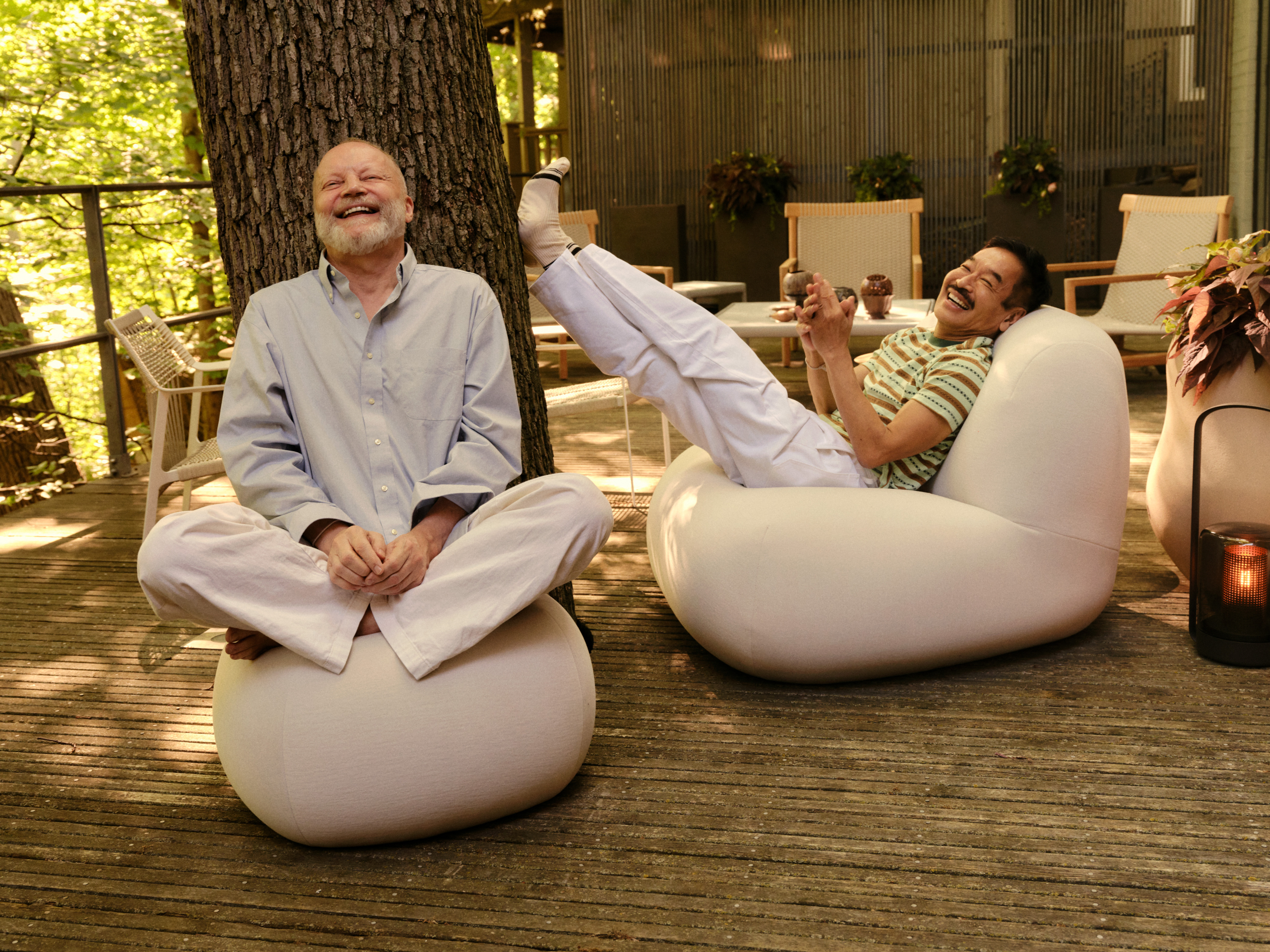
George Yabu and Glenn Pushelberg by Clement Pascal.
Your studio has revolutionized interior design, particularly with its arrival in the U.S. from Toronto. Your brand became the true status quo in the hospitality sector with a pioneering approach to the design of furniture and objects. What was the project that made you realize Yabu Pushelberg had become, in the eyes of all, a global benchmark?
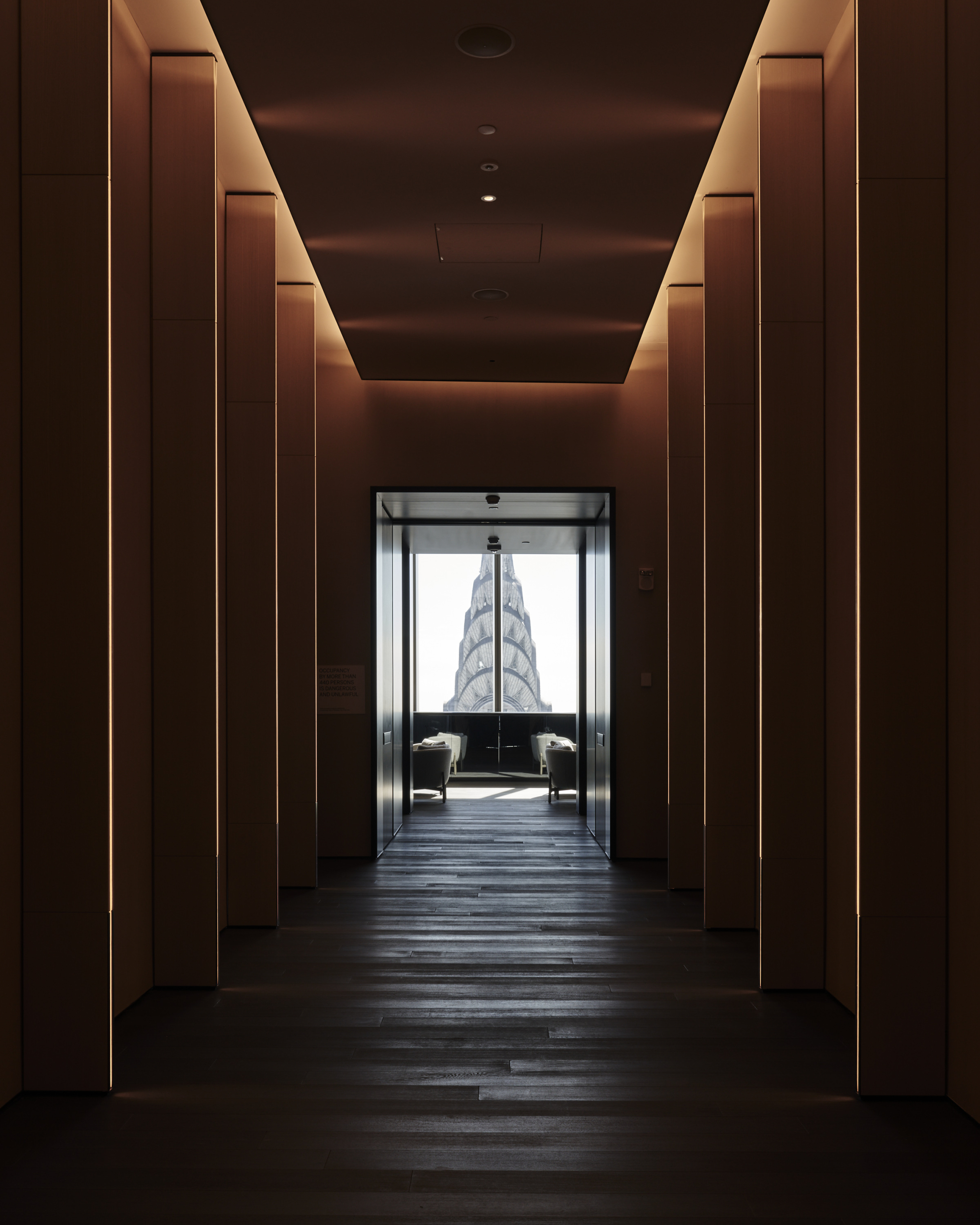
Glenn Pushelberg: Actually, you know, rather than hotels, I would love to begin by recalling residences—our earliest steps in this industry. There have been multiple defining moments, but especially in recent years, we’ve reshaped how people think about residential projects. One iconic project for us is the Aman Residences in Tokyo, located in the tallest building in the city. We approached it as interiors as sculpture. Most residential projects focus on materiality, placing sculptures or artworks in a space, but we believe that interiors themselves should be three-dimensional architecture and art.
George Yabu: So true! The pool area, the lobby, and the amenity spaces all embody this idea. Since that project, we’ve continued with a similar approach in Shanghai, where stone walls appear as waves of water. We’re changing the nature of typology, and we expect that, who knows, others will follow this new way of understanding aesthetic and emotional experience.
George and Glenn, your projects are deeply rooted in storytelling, not just aesthetics. How do you approach designing, intertwining it with an authorial narrative?
Glenn Pushelberg: We don’t follow design trends—we define the problems that need solving. These could be aesthetic, functional, or cultural. Addressing these elements makes the work stronger and clearer. We want to avoid being mere stylists in our industry. It’s essential to make technical and wise decisions for the success of an artwork and not to consider ourselves just decorators.
George Yabu: Design today, both in interiors and fashion, often resorts to styling rather than true innovation, simply because trends move so quickly. This leads to a superficial approach without depth. There’s an overload of information and too little knowledge. Our goal is to go deeper by choosing the right collaborators and the finest artisans.
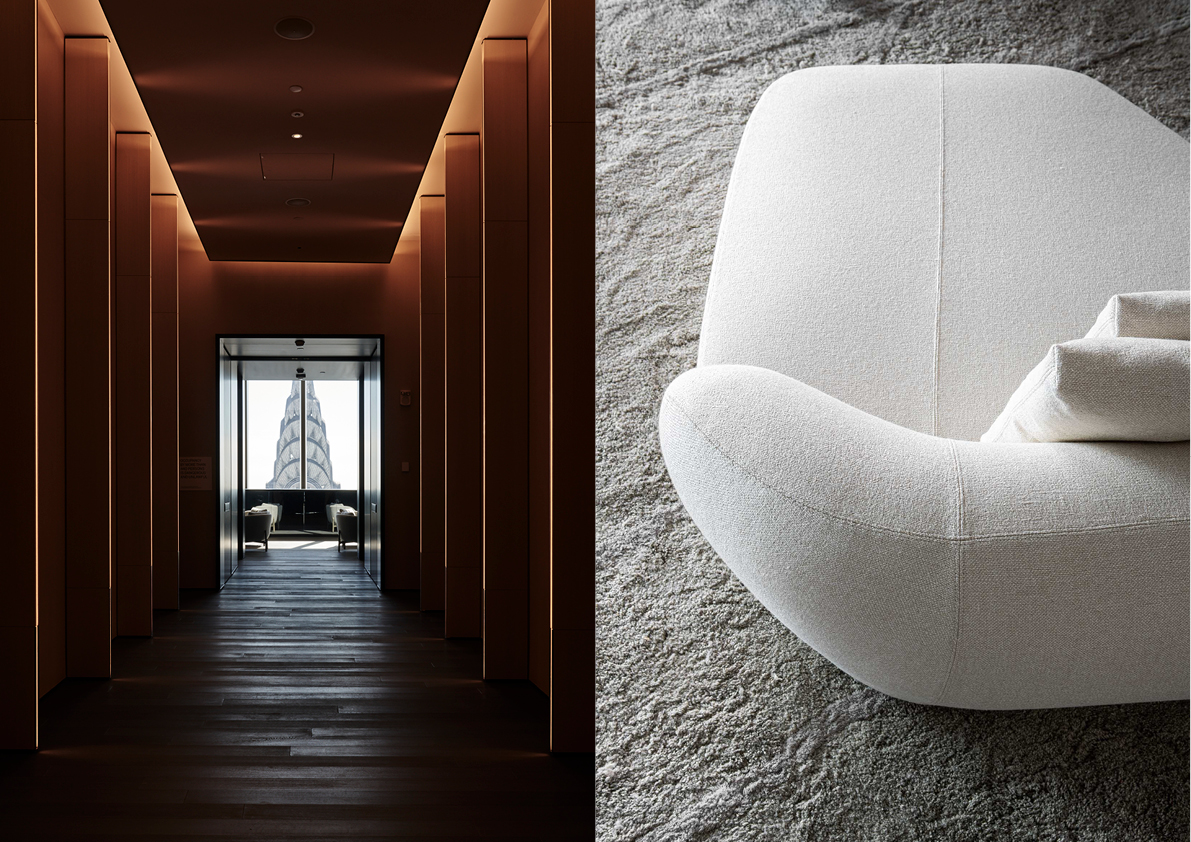
Centurion New York / Molten&C_Surf Collection.
It is customary for you to collaborate fluidly and effortlessly with artisans, creatives, and artistic directors from various fields and parts of the world. What do you look for when selecting a partner?
George Yabu: We collaborate with artists, production companies, and engineers to push boundaries. For example, when we designed the Surf sofa for Molteni, they initially asked us for a modular design. But we thought, “Does the world really need another modular sofa?” So we redefined the idea—creating something modular without looking modular. That’s what made it unique. Another example is how we work with different creative disciplines—architects, product designers, graphic designers. Genuine contamination fosters the development of new paths, new nuances, and possible solutions.
Glenn Pushelberg: Definitely right! Over the years, we’ve learned how to orchestrate a “symphony” of talent, making each project more holistic and complete.
Speaking of structural and architectural longevity, some of your early hospitality projects have lasted far beyond their expected lifespans, and it seems your work is truly conceived and built to last. How do you create designs that stand the test of time?
Glenn Pushelberg: We don’t just think about the interiors; we consider every tiny detail and characteristic—fabric, graphics, tableware, even custom-designed plates for restaurants. This depth of thought makes projects feel more complete, timeless, and authentic, allowing them to assume their own color and distinctive mark.
George Yabu: For example, our work at Bergdorf Goodman’s beauty department has remained unchanged for over 25 years. We had to hand-sandblast glass to achieve the gradient effect back then, but now it’s easily done by machines. The fact that our design still stands speaks to its longevity. It’s definitely an important sign for us—a great outcome through time.
Turning our attention back to the origins of Yabu Pushelberg, what was the concept behind the Four Seasons Tokyo in Marunouchi?
Glenn Pushelberg: This was actually our first hotel project. The founder of Four Seasons approached us, saying he had a client who wanted a truly contemporary hotel. At the time, Four Seasons had never done a contemporary design. The challenge was making it feel modern while still honoring Japanese aesthetics and maintaining the classic luxury of the brand—blending the past and present, cosmopolitanizing and updating the design.
George Yabu: We curated an incredible art collection and created a refined interior that felt both fresh and familiar. Ironically, we’re now in discussions about renovations—proof of how long the design has remained relevant. We’ve developed constantly with the long term in mind. Our projects are meant to evolve and continue telling their stories over time.
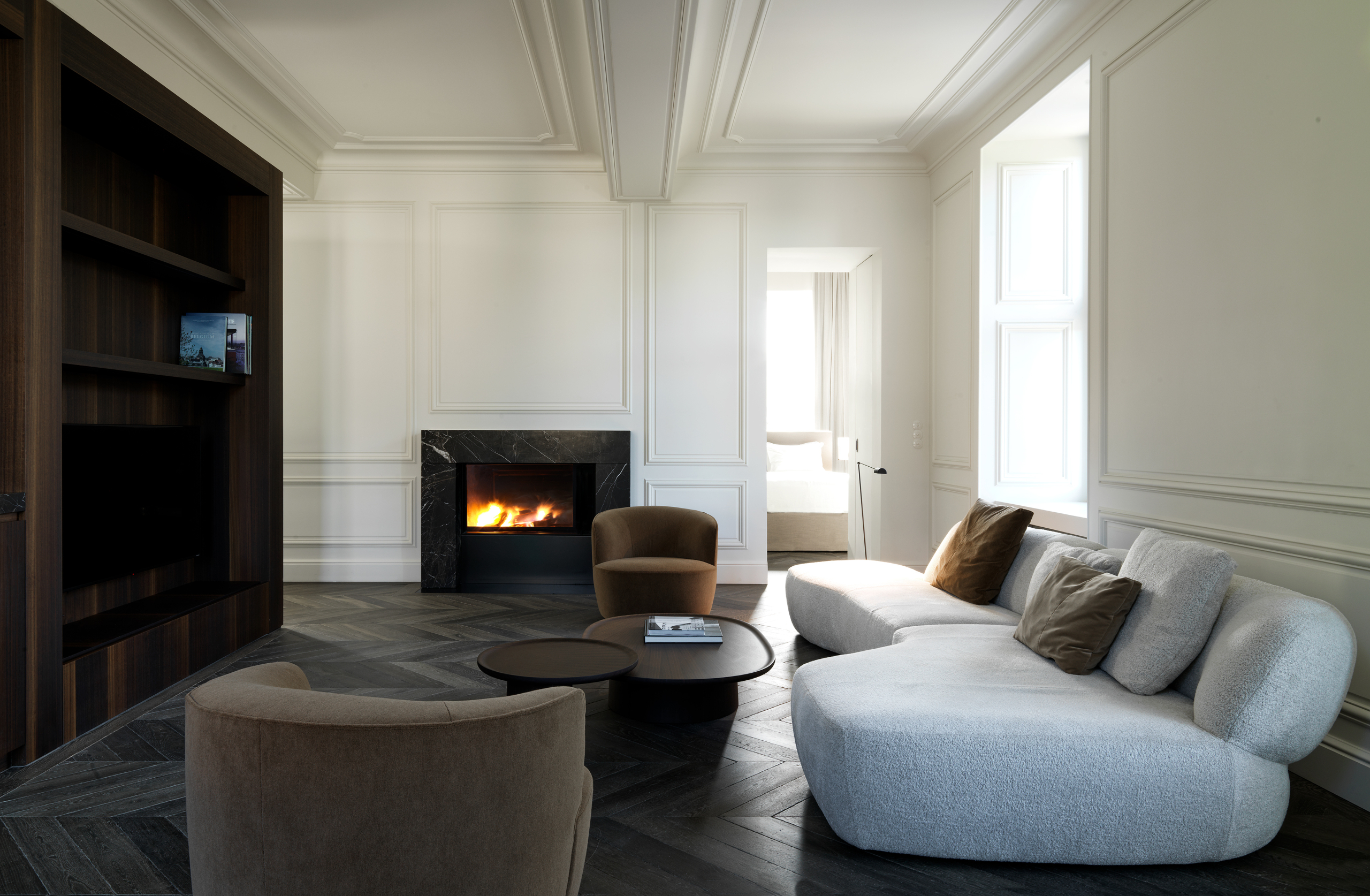
Molteni&C_Surf Collection at Le Château de Mirwart.
Now, let’s change perspectives and enter the mind of the client, stepping into the shoes of a businessman of our times, a company director. From your point of view and experience, what is the defining quality of a true visionary entrepreneur?
George Yabu: Passion, Niccolò. You have to have genuine passion. Often, we work with investor groups or corporate clients who are only interested in ROI, their return on investment. But we tell them, “Wait, we haven’t even finished designing it yet, and you’re already asking how much money you’ll make?” It’s disheartening. I prefer working with entrepreneurs—people building businesses or second- and third-generation owners growing their companies.
Glenn Pushelberg: Yes, exactly. They believe in innovation and in the value of design as a real contributor to business, whether it’s a piece of furniture, a hotel interior, or a luxury residence. They seek innovation. We want partners that share our same values, not just people that want our names attached to a project. Between the client and the designer, at the end of the day, when all is said and done, there has to be curiosity on both sides. We need to understand the client’s desires, and they need to articulate them clearly. That gives us the foundation to lead the design process. A two-way conversation is essential to create that spark. Sometimes, we have amazing clients who trust us completely. But if a client isn’t evolving with you, it becomes boring—it just doesn’t work. And that’s okay. It’s been a nice journey, thank you, but now we’re moving on to new things. Fortunately, we’re in a position where we can make those choices.
What do you think about the future of the design industry in relation to the hospitality sector, which is no longer just about luxury and comfort—it’s about experience and emotional connection with the environment? How are you addressing its evolution in your latest projects?
George Yabu: Exactly, we definitely agree. Everyone keeps saying that true luxury is about experiences, or that it’s about space—the generosity of space. But I think the relationship with nature is key as well. Take resorts, for example. There’s a shift toward revisiting old craftsmanship, embracing slower, more thoughtful processes instead of mass production with machines. In a factory, one person can oversee the entire process of making kitchen cabinets. But with true craftsmanship, luxury is about elevating the best possible techniques.
Glenn Pushelberg: Sometimes, people confuse exclusivity with luxury, but they’re not the same. That’s something we’re trying to explore right now. I think about micro-hotel rooms. If I walk into one and everything is carefully considered—the shape of the sake glass, the crafted details, the sense of serenity when I lie in the bed, the intuitive ease of use—that’s luxury to me. It’s a feeling. A great night’s sleep. For a resort, luxury is different. It’s about the connection to nature. It’s about sensuality—especially if you’re there with someone you care about. True luxury taps into these emotional states. It’s not about material wealth or artificial embellishments. It’s about how you feel. That ties into the idea of longevity—luxury as something timeless rather than just following trends. We can’t follow the fast pace of fashion. One moment, it’s all about wide-leg pants, and the next, we’re back to skinny jeans. That kind of cycle doesn’t work in our world. Speaking of resorts, for example, we’ll spend time debating where to place the bed so that it faces the sunrise or sunset. That’s an emotional response. If I didn’t care about emotion, I’d just put the bed wherever is most efficient. But the experience of waking up, of going to sleep, the separation between sleeping, bathing, and living spaces— those are fundamental. The owner might say, “Let’s make the room smaller to fit more oceanview suites.” But we might argue, “If you make it half a meter wider, you can turn the bed to face the view instead of the wall.” That’s the difference between a rational approach and an emotional one. And sometimes, you can offset things—maybe part of the rooms don’t have ocean views, but you create an incredible garden experience instead. That’s how we shape experiences.
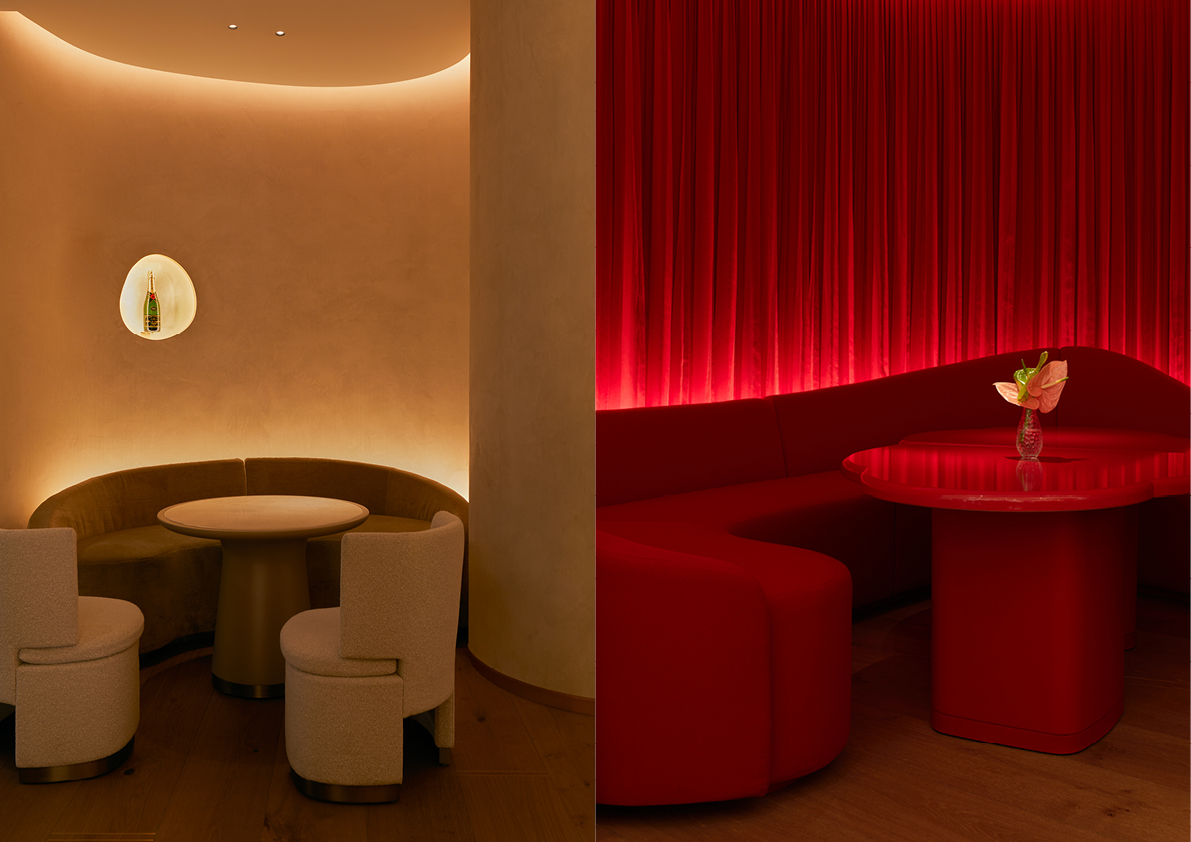
Moët & Chandon Bar Berlin.
Allowing ourselves a small detour for a moment on sustainability. When you’re ideating something new, does the thought of sustainability limit your creativity, or does it inspire you to go beyond? To mention a parallel intersection, the feasibility of a project is often also analyzed during its initial development phase.
George Yabu: We’ll be honest—we’ve been struggling with this over the last few years. We have monthly seminars in our studios where we educated all designers about materials and sustainability. We have a full-time sustainability advisor who helps guide us in the right direction, and we’ve restructured our approach. We now take it one material at a time—wood, stone, etc.—and educate our team on the best practices. That’s actually the easy part. The hard part is convincing clients that sustainability matters. We’ve learned that simply saying, “This is sustainable” doesn’t work. Instead, we talk about contextualism—locality is our key principle: we use materials sourced from the area surrounding the project. It’s about economy; local materials are often less expensive. So instead of leading with “It’s sustainable,” we say, “It makes sense for this place. It feels right.” And, by the way, it’s also sustainable. If you start by saying, “This material is eco-friendly,” the first things clients think are: “Is it going to cost more?” and “Is it as beautiful as I expect?” So we flip the conversation. We show them that it’s beautiful, practical, and cost-effective. Then we say, “Oh, and by the way, it’s sustainable.” Because we are sourcing from local manufacturers and not shipping from all over the word. That makes sense. Especially in today’s political and economic climate, where certain policies are rolling back sustainability efforts, it’s even harder to justify the investment. Yes, and we’ve seen this before.
Glenn Pushelberg: Back in 2007–2008, we worked on a project for a new hotel group focused on sustainability. We designed a prototype room that was beautiful and used sustainable materials, but it didn’t look like what people expected a “green” hotel to look like. At the time, the Toyota Prius was the big eco-friendly car, but it was an ugly car. We thought, “If we were designing a car, we’d make a beautiful hybrid.” So we took that approach with the hotel room— designing something elegant, but still sustainable. When the owner saw it, he said, “This is terrible. It doesn’t feel sustainable.” We were fired from the project. That was 2008. Today, things have changed. Now, we know that sustainability isn’t just about materials—it’s about longevity. If we create interiors that last twenty, thirty or forty years, or furniture that people want to keep forever, that’s more sustainable than buying something cheap and disposable. Quality is always sustainable. We often tell this story: When we were young and broke, we needed drafting stools. But instead of buying something cheap, we spent everything we had on three Joe Colombo chairs. They weren’t practical for drafting, but they were beautiful. And 45 years later, we still have them. That’s sustainability. The chairs reside now at our Perry Street apartment in New York City.
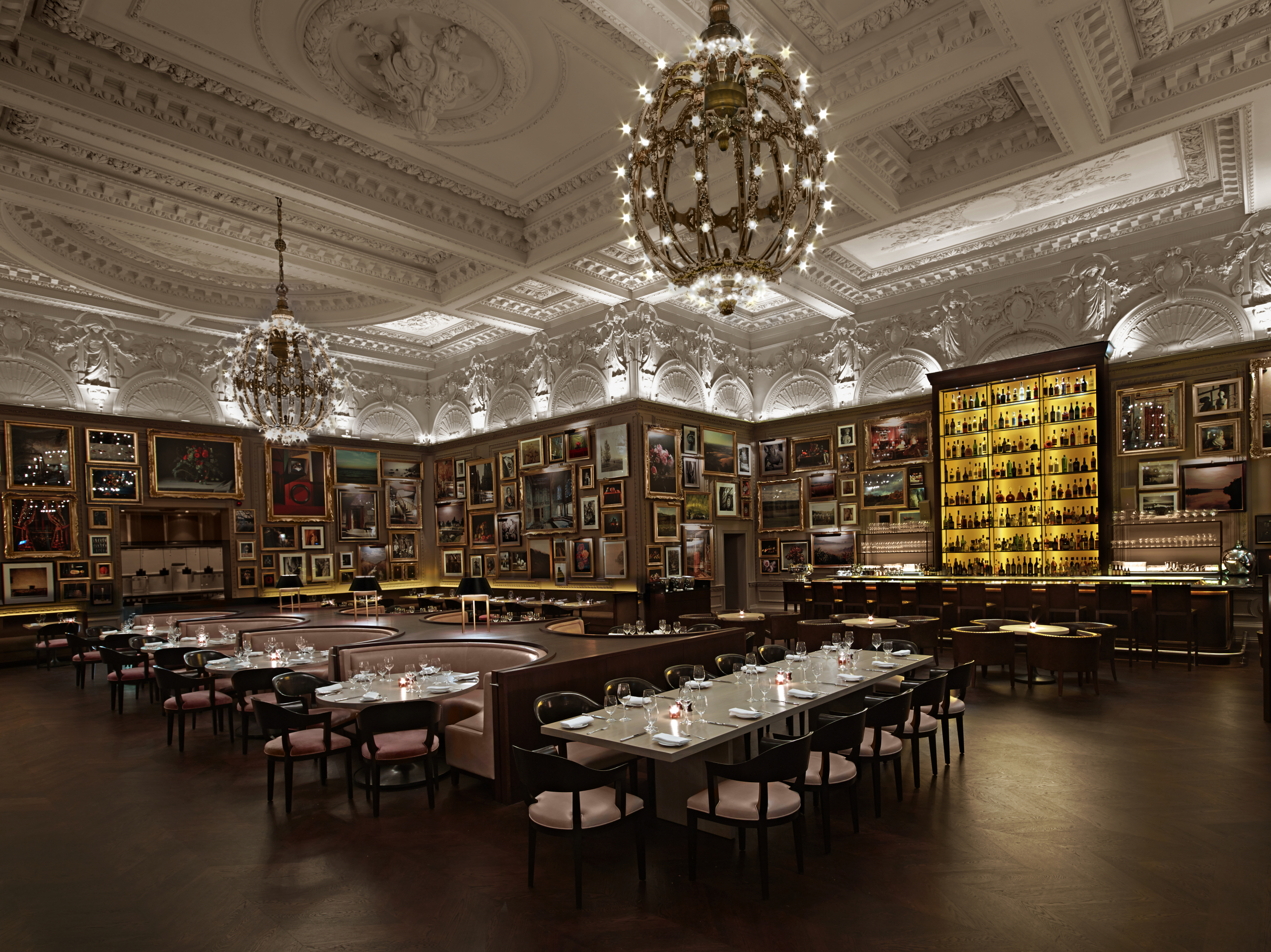
The London EDITION.
My last question—it’s quite personal. You are a duo, partners in crime, and your combination is undoubtedly a winning one, but for you to be so perfectly complementary, you must surely have different tastes. If you had to choose one material and one color to define your professional souls, what would they be?
George Yabu: As for materials, I’d choose unadorned materials—wood with an open grain, stone that hasn’t been overly polished. For color, I’ve always loved blue, but lately, I feel drawn to green. I don’t know why, but I just feel comfortable in it.
Glenn Pushelberg: For me, actually, the answer is more focused on materials than colors. We’re looking for materials that feel authentic—nothing too processed or artificial. Wood should feel like wood, stone should feel like it came straight from the quarry. The essence of a material should come through, not just its surface.