EREDI ZUCCA
Santo & Ventuno. Eredi Zucca’s new Eaux de Parfum.
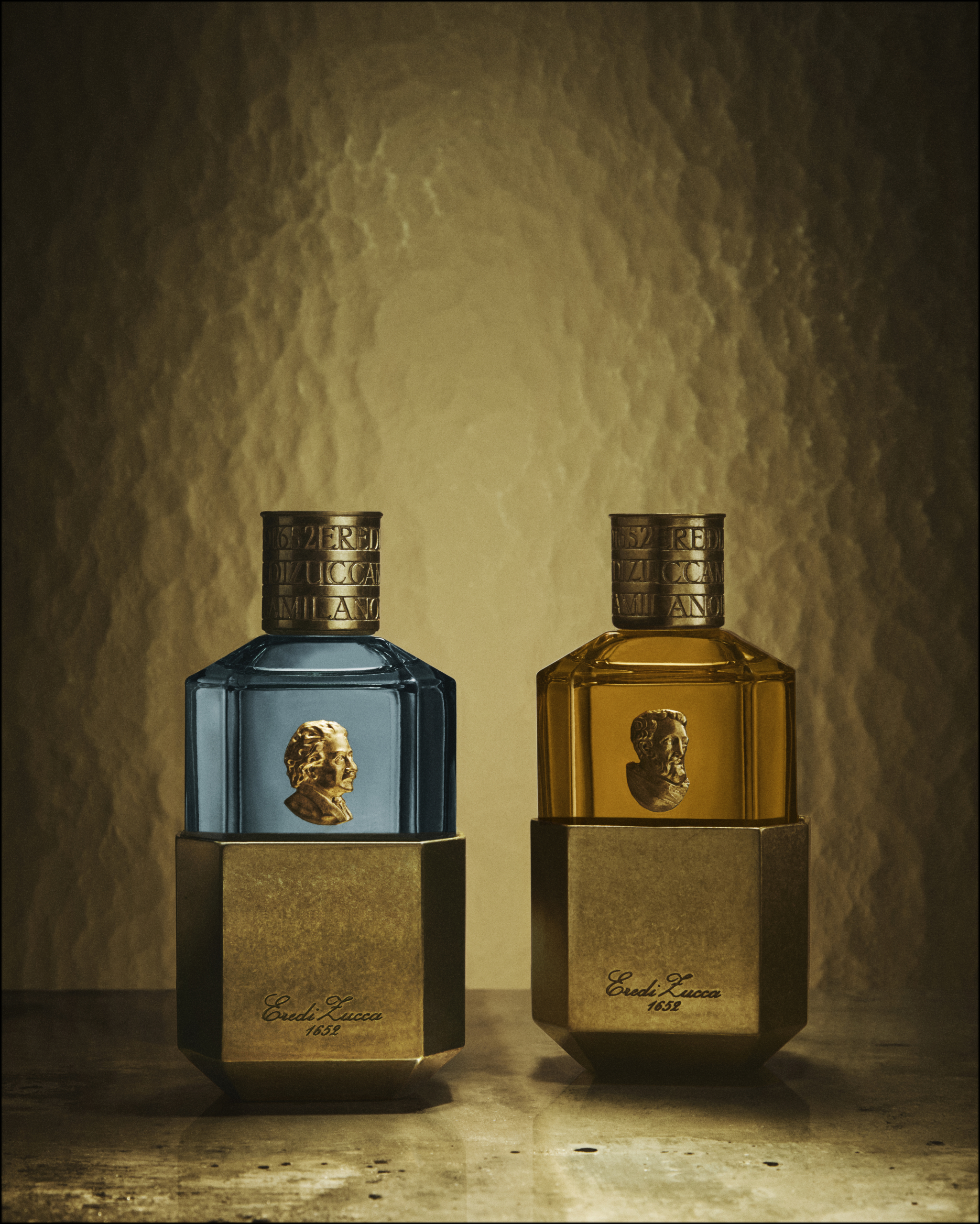
With Santo and Ventuno, Sant’Ambrogio and Albert Einstein join the olfactory landscape of the Milanese maison, bringing its fragrance collection to a total of ten. Running through the heart of Milan, Via Bigli is a discreet street that holds more than it reveals. At number 21, Hermann Einstein and his family made their home when he moved to Milan in 1894, relocating his industrial business to a city that had recently opened Europe’s first power station. Alongside him was his fifteen-year-old son, the very Albert Einstein who, within a decade, would reshape our understanding of space and time through a new set of laws. A little further west stands the Basilica of Sant’Ambrogio, dedicated to Milan’s patron saint since the fourth century. He gave the city its own liturgical rite, which is still celebrated today. This compact yet densely layered area is home to the Eredi Zucca boutique, a space of marble and boiserie that preserves the art of barbering, documented in the city’s statutes as far back as 1652. Santo and Ventuno emerge from these neighbouring presences: two new Eau de Parfum that translate the district’s symbolic guardians into scent, bringing the collection to a total of ten fragrances.
Eredi Zucca | Santo & Ventuno.
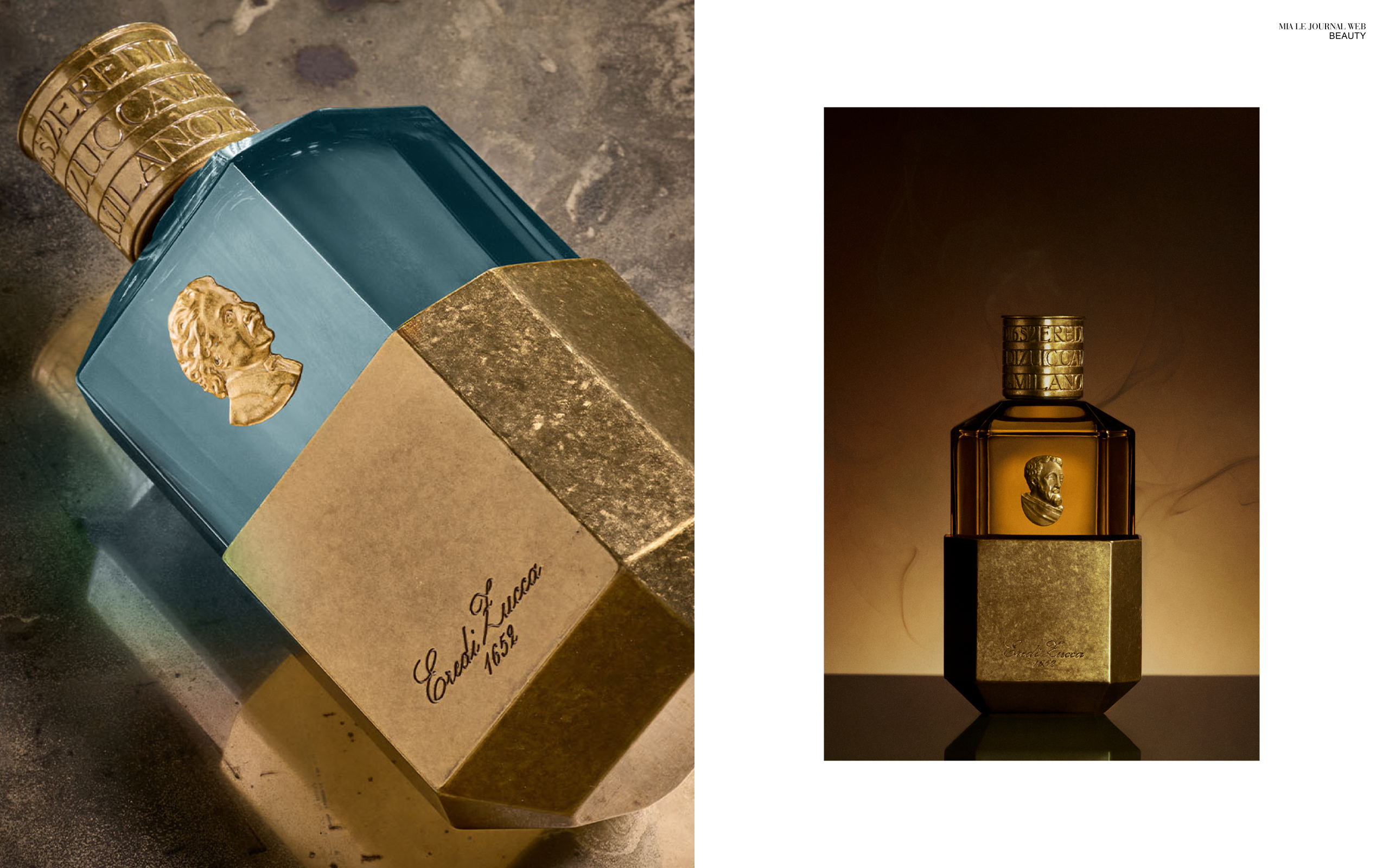
Both compositions were created by Alessandro Olmo, a perfumer at Givaudan, who was invited to carry forward the collection’s dual language: raw materials that evoke the scents of historic workshops and, subtly woven through them, a dialogue with the guiding figures of Milanese thought. Each bottle is a small glass sculpture finished with brass detailing, with their portrait set in a cameo.

Eredi Zucca | Santo.
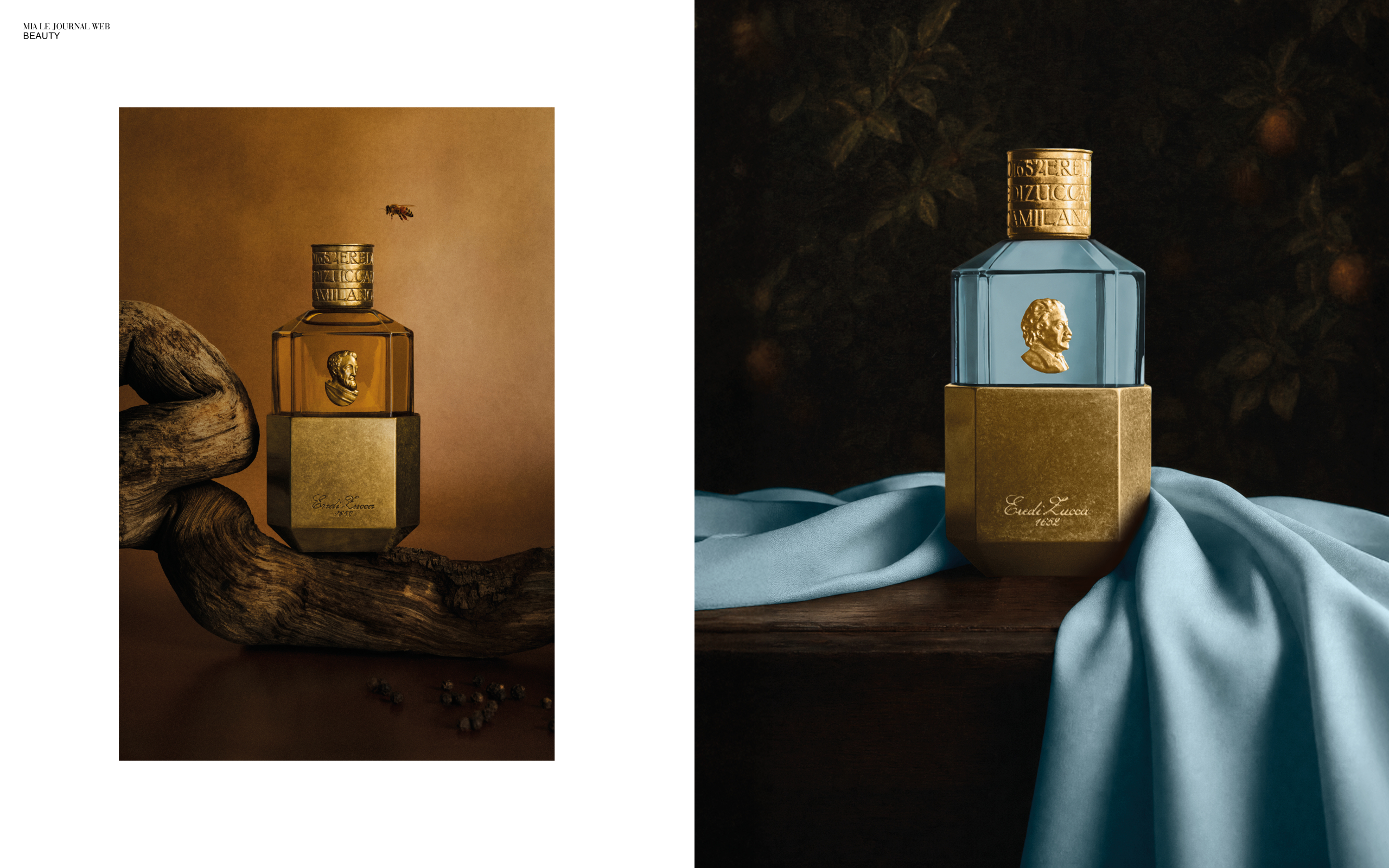
Santo, a woody, ambery and resinous composition, pays tribute to Sant’Ambrogio, the governor whom the people of Milan acclaimed as bishop and chose as their patron saint. Tradition tells of a swarm of bees settling on his lips as a newborn, a sign of his honeyed eloquence to come, the same marvel that antiquity attributed to the infant Plato. The bottle’s honey-orange glass draws on that symbolic beehive, glowing with the warmth of liturgical amber. Italian bergamot and Madagascan black pepper open the composition with a sharp verticality, complemented by almost mineral clarity of elemi from the Philippines. At its heart, Atlas and Virginia cedar create a dry structure, over which Haitian vetiver casts its smoky shadow, while Indonesian patchouli adds a restrained sensuality. In the base, Somali frankincense, myrrh, a leather accord and musk create a sense of spirituality that is intimate and meditative rather than ceremonial.
Eredi Zucca | Santo & Ventuno.
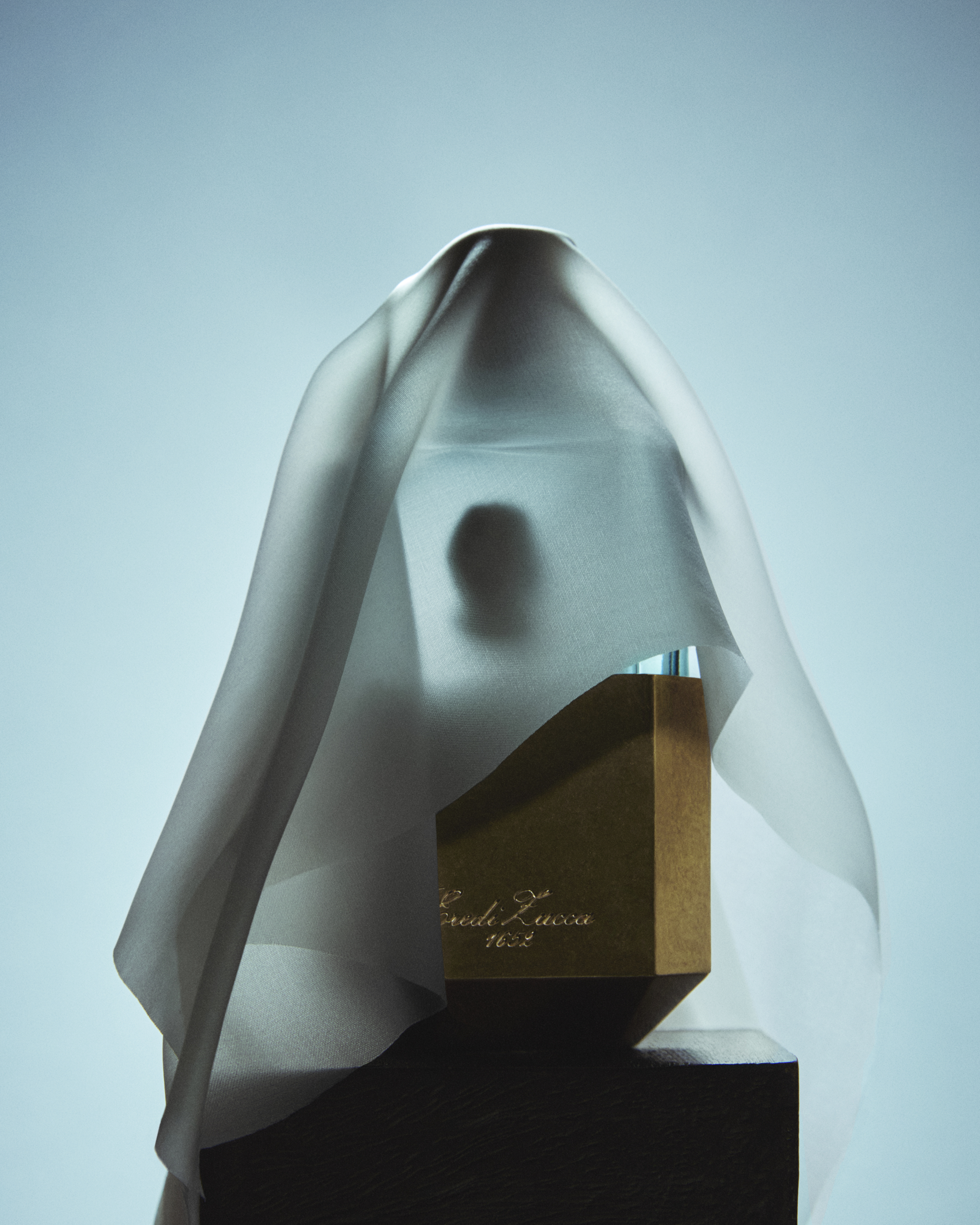
Ventuno, a citrus, woody and musky fragrance, takes its name from number 21 Via Bigli, where the Einstein family lived between 1894 and 1900, in Palazzo Olivazzi, which the physicist would later remember as the home of his happiest years. Before the skies of Bern and the annus mirabilis, there was Milan, with its walks and notebooks. The powder-blue bottle captures the dawn of thought, its ethereal colour suspended between the sky and the worn paper of his notes. The fragrance opens with a luminous burst of Italian bergamot, clementine and lemon, given an airy quality by a green tea accord. At its heart, pink pepper creates a vibrant pulse, while white flowers and magnolia diffuse a sheer sensuality. In the base, Indonesian patchouli and Virginia cedar lend structure to a sillage that musk extends like an idea lingering in space. As a child, Einstein received a compass from his father and experienced his first flash of wonder before the mystery it revealed. That same sense of wonder, which Plato and Aristotle – the foundational epigraphs of the maison – identified as the origin of all philosophy, remained for him the source of all true art and all true science.
Eredi Zucca | Ventuno.
The saint and the scientist now stand side by side on the shelves of the Via Bigli barbershop: two distinct ways of belonging to Milan, united by a single source. Ambrogio dug beside his basilica in search of forgotten martyrs; Einstein pursued a beam of light in his imagination. Both answered to the same sense of wonder. Santo and Ventuno preserve the echo of that wonder, expanding the olfactory epic through which Eredi Zucca continues to transform the city’s memory into an eternal present.
Eredi Zucca is rooted in a fascination with philosophy and meticulous research into the archives and commercial almanacs of Milan, where the Zucca name appears as early as 1652 in the Ordini et statuti dell’Università et collegio dei barbieri della città, the orders and statutes of the city’s guild and college of barbers. At the time, barbers also practised as dentists and surgeons. Drawing on this documentary legacy, Eredi Zucca has created a Maison that is an ode to the world of barbering, elevating its private rituals and everyday devotion to beauty while bringing together cosmetic innovation and heritage. Each object is crafted by the finest artisans, from razor handles in stag horn and ebony to the iconic marble jars, and finds its home in the Via Bigli boutique. Here, beneath coffered ceilings and decorative panels created by Venetian master glassmakers, three suites invite guests to rediscover the most authentic meaning of self-care. This evolving project transforms the past into a tangible contemporary experience, guided by the sense of wonder that the ancients recognised as the beginning of all philosophy.
Press Release.